What to Do When a Tenant Damages Your California Property in 2026
Donny Piwowarski | August 21, 2026
Tracy, CA
Donny Piwowarski | August 21, 2026
Tracy, CA
The documentation that makes your claim airtight. The deductions that hold up in court. The mistakes that hand the tenant a free pass on damage you have every right to recover. Here's the complete 2026 guide.
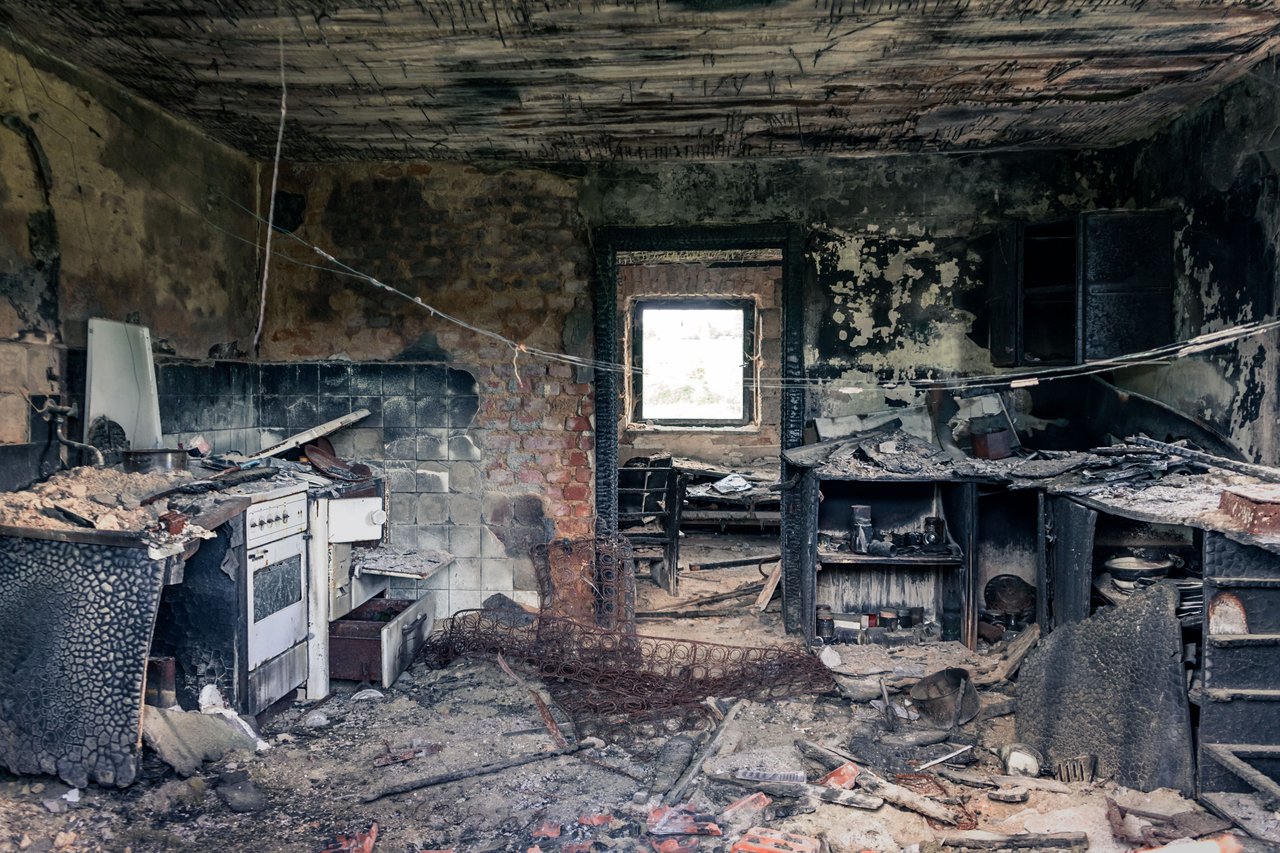
You walk through the property after the tenant moves out and find what you didn't want to find: a hole in the wall, carpet that needs full replacement, a bathroom fixture that's been broken and not reported, a kitchen that needs more than cleaning. The damage is real. Your security deposit is one month's rent under AB 12. The question is how much of it you can actually recover.
In California in 2026, the answer to that question is almost entirely determined by what happened before the tenant moved in — not by how clear the damage is when they move out.
This is the honest guide to handling tenant property damage in California in 2026. The documentation that protects your claim from the start. The legal framework for what you can and can't deduct. The specific mistakes that turn legitimate damage claims into unrecoverable losses. And the process that gives you the best possible chance of recovery when things go wrong.
Quick disclaimer: This is a property management perspective, not legal advice. California security deposit and property damage law is technical and varies by local jurisdiction. Work with a licensed property manager or California landlord-tenant attorney on your specific situation.
Before anything else about handling tenant damage, you need to understand what AB 2801 changed — because it fundamentally shifted the burden of proof in every California security deposit dispute.
<cite index="680-1">Starting January 1, 2026, California AB 2801 requires landlords to photograph a rental unit before and after every tenancy.</cite> The law mandates photos at three specific points:
Photo Set 1 — Before move-in: Taken after the unit is cleaned and repaired but before the tenant takes possession. These establish the baseline condition. <cite index="686-1">For leases starting July 1, 2025, landlords must take photos documenting the property's condition at move-in.</cite>
Photo Set 2 — After move-out, before repairs or cleaning: Taken immediately after the tenant vacates and before any cleaning, repairs, or restoration work begins. These document the as-left condition and establish what damage occurred during the tenancy.
Photo Set 3 — After repairs or cleaning: A second set taken once the work is completed, showing the restored condition. These are required when deductions are being made for repair or cleaning costs.
<cite index="681-1">If a landlord fails to comply with this mandatory documentation requirement and then makes deductions from the security deposit, the tenant may be entitled to statutory damages in addition to the return of improperly withheld funds.</cite>
What this means in plain language: if you don't have the photos, you can't make the deductions — regardless of how obvious the damage is.
<cite index="682-1">A $1,500 carpet replacement claim becomes a $0 recovery if you can't prove the carpet wasn't already damaged when the tenant moved in.</cite> The photo is not optional documentation. It is the deduction. Without it, you have no defensible position in small claims court, and you may face statutory penalties for attempting to make deductions without required documentation.
If your move-in process doesn't currently include timestamped photos of every room, every appliance, every fixture, and every surface — that process needs to change before your next tenant moves in.
This is the distinction that produces the most disputes and the most landlord mistakes. California law allows security deposit deductions for actual damage — not for ordinary wear and tear. The difference is both legally defined and practically important.
Ordinary wear and tear — NOT deductible:
Actual damage — DEDUCTIBLE:
The proration rule that catches landlords off guard:
Even for legitimate damage, deductions must be prorated for the remaining useful life of the damaged item. <cite index="683-1">Landlords must prorate any deduction for items that weren't new.</cite>
Example: If the carpet in a bedroom had an expected 10-year useful life and was 7 years old when the tenant moved in, the landlord can only claim 30% of replacement cost — the remaining useful life — not the full replacement cost. Claiming 100% of replacement cost on a 7-year-old carpet is not a defensible deduction in a California small claims proceeding.
The proration requirement applies to flooring, appliances, paint, fixtures, and most other depreciable items. New items at move-in can be claimed at full replacement cost. Items with existing age must be prorated.
California Civil Code § 1950.5 requires landlords to deliver the security deposit accounting to the tenant within 21 days of the tenant vacating the property.
The 21-day clock starts when the tenant moves out — not when repairs are completed, not when the landlord has time to process the claim, not when the final invoices arrive.
<cite index="684-1">The 21-day clock runs from the date the tenant vacates — not the date repairs are finished, not when keys are returned. A good-faith estimate buys time on incomplete repairs, but the clock does not pause.</cite>
What must be delivered within 21 days:
If repairs aren't completed within 21 days: you may provide a good-faith estimate of the repair cost in place of the final invoice. The estimate must be reasonable and based on actual contractor quotes. Within 14 calendar days of completing the work, you must send the final accounting with the actual invoice and any adjustment to the original estimate.
The penalty for missing the 21-day deadline:
A landlord who fails to deliver the itemized accounting within 21 days forfeits the right to make deductions — and may be ordered to return the full deposit plus face statutory damages. <cite index="679-1">Courts award penalties when they find bad faith actions, such as fabricated charges or ignored deadlines.</cite>
The 21-day deadline is absolute. Set a reminder the moment the tenant vacates.
Under AB 12 (effective July 2024), the maximum security deposit for most California residential rentals is one month's rent. On a $2,700/month Tracy rental, that's a $2,700 deposit maximum.
When damage exceeds the deposit — a not-uncommon scenario with major pet damage, extensive wall repairs, or flooring replacement throughout — the landlord has two paths:
Path 1: Small claims court
California small claims court handles claims up to $12,500 (increased as of 2024). For damage that exceeds the deposit by less than $12,500, small claims is the most practical forum. The landlord files a claim against the former tenant for the difference between documented damages and the security deposit amount.
Success in small claims requires:
A court that finds the landlord has complied with all documentation requirements and has a legitimate damage claim will award a judgment. Collecting on that judgment — when the tenant has moved and may have limited assets — is a separate challenge.
Path 2: Tenant's insurance (renter's insurance)
California landlords can require tenants to carry renter's insurance as a condition of tenancy — a lease provision that can provide direct damage recovery through the tenant's insurance carrier rather than through small claims. Renter's insurance typically covers accidental tenant-caused damage to the rental property.
If your lease requires renter's insurance and the tenant has an active policy, file a claim through that policy when damage occurs. This is often faster, cleaner, and more certain than small claims litigation.
For leases that don't currently require renter's insurance: add this provision at the next renewal. It's one of the most practical damage-protection tools available to California landlords in 2026.
Not all tenant damage is discovered at move-out. Damage can be discovered during a permitted inspection, reported by the tenant, or identified during a maintenance visit. Handling mid-tenancy damage correctly is different from handling move-out damage.
When damage is discovered during the tenancy:
Document immediately with timestamped photos. Provide written notice to the tenant identifying the damage. Under California Civil Code § 1950.5, the tenant is responsible for damage they cause — but in practice, seeking to deduct mid-tenancy is complex because the deposit can't be accessed until move-out.
Options for mid-tenancy damage:
The lease violation notice serves two purposes:
For significant damage discovered mid-tenancy — damage that suggests the tenant may not be taking care of the property — this is also the moment to evaluate whether to offer or require an early termination, rather than waiting for additional damage to accumulate through the remainder of the lease.
Situation 1: No move-in photos
A landlord takes over a new property mid-tenancy and has no documentation of the unit's condition when the previous landlord's tenancy ended. Or a self-managing landlord simply never developed a photo documentation practice.
When the current tenant moves out and damage is claimed, the landlord has no baseline. Without proof that the carpet was in good condition at move-in, the claim that the tenant damaged the carpet is unprovable. The deduction fails.
The fix: AB 2801 compliance from the very next tenancy. No exceptions, no shortcuts.
Situation 2: Claiming wear and tear as damage
A landlord claims deductions for repainting a unit after a 4-year tenancy, citing "dirty walls." California courts consistently hold that repainting after a normal tenancy is not a deductible expense — walls are expected to require repainting after several years of occupancy. The landlord loses this deduction routinely.
The fix: Only claim deductions for damage beyond what a normal tenancy would produce. Paint deductions are only appropriate for unusual damage: crayon or marker drawings, large holes filled and repainted, intentional damage.
Situation 3: Missing the 21-day deadline
A landlord takes 30 days to get contractor quotes, complete repairs, and process the accounting. By then the deposit accounting is late, the tenant has already filed a small claims action, and the landlord faces forfeiture of deduction rights plus potential bad-faith penalties.
The fix: Set the 21-day clock as a hard deadline from move-out day. Use good-faith estimates if repairs aren't complete. Never miss this deadline.
Situation 4: Vague itemization
A landlord submits an accounting with line items like "cleaning: $300" and "repairs: $750" without receipts or specific descriptions. A court reviewing this accounting will find it insufficiently specific — California requires the deduction to identify what was cleaned or repaired, by whom, at what rate, and with supporting documentation.
The fix: Every deduction must be specific. <cite index="682-1">"Carpet replacement, bedroom two, 120 square feet at four-fifty per square foot, receipt attached" — that holds up. "Repairs: $450" is not a compliant deduction.</cite>
Situation 5: Claiming the full cost of old items
A landlord claims $2,800 for full carpet replacement without prorating for the carpet's age (8 years old, expected useful life 10 years). A California court will prorate this to 20% of replacement cost — approximately $560. The landlord recovers $560 instead of $2,800, not because the damage wasn't real but because the deduction wasn't legally calculated.
The fix: Know the expected useful life of every major item in the unit. Calculate prorated deductions before submitting the accounting.
When a tenant moves out and damage has occurred, here is the step-by-step process that produces the most defensible claim:
Immediately after move-out (before any cleaning or repairs):
Within 48–72 hours:
Within 21 days of move-out:
After repairs are complete:
If damages exceed the deposit:
Haven Property Management Group manages the property damage and security deposit process for Central Valley landlords as a standard operational function — beginning at move-in, not at move-out.
We comply with AB 2801 from day one. Every Haven-managed property receives timestamped move-in photos before the tenant takes possession, and every move-out begins with a timestamped inspection before any cleaning or repairs start. The foundation of every damage claim is already in place before the tenant ever signs the lease.
We document specifically. Our move-in and move-out inspections are room-by-room, surface-by-surface, with notes and photos that create the comparison the court needs if a dispute arises. Vague documentation produces vague deductions. Specific documentation produces specific, defensible claims.
We track useful life and prorate correctly. Our accounting reflects the California legal standard for depreciation — we don't claim full replacement cost on items with remaining useful life, because courts will reduce those claims and the landlord's overall position suffers.
We meet the 21-day deadline. Always. Without exception. Our property management process includes an automated timeline from the day a tenant gives notice, ensuring the accounting is prepared, documented, and delivered within the legal window regardless of repair timelines.
We pursue excess damage claims strategically. When damage exceeds the deposit, we advise owners on the realistic cost-benefit of small claims pursuit versus other recovery paths — including renter's insurance claims — so they make informed decisions about their time and resources.
If you've recently dealt with a property damage situation that didn't go the way you expected — or if you want to make sure your current process protects you from the documentation failures that cost landlords their claims — a consultation with Haven is the right starting point.
Call or text us directly: (855) 876-7653 Or get started at tracycapropertymgmt.com
Haven Property Management Group · 3120 N Tracy Blvd, STE D · Tracy, CA 95376 · DRE# 02215439 Proudly serving Tracy, Lathrop, Manteca, Stockton, Modesto, and the Central Valley.
Stay up to date on the latest real estate trends.

Tracy, CA
Donny Piwowarski | October 21, 2026
Preparing a vacant inherited home for sale is a different kind of project than getting your own home ready to list. You may not know the property's full history. There… Read more

Tracy, CA
Donny Piwowarski | October 21, 2026
If you own or are considering buying rental property in Tracy, California, this guide is for you. Tracy's rental market has been one of the more resilient in the Centr… Read more

Tracy, CA
Donny Piwowarski | October 20, 2026
California landlords have a new legal obligation at move-in and move-out — one that took effect in stages over the past year and a half and is now fully in force for m… Read more

Tracy, CA
Donny Piwowarski | October 19, 2026
If you inherited a house in Tracy or the San Joaquin Valley but you live somewhere else — another city, another state, another country — you're managing one of the mor… Read more

Tracy, CA
Donny Piwowarski | October 16, 2026
Security deposit disputes are one of the most common — and most avoidable — sources of landlord liability in California. Miss a deadline, skip an itemization requireme… Read more

Tracy, CA
Donny Piwowarski | October 16, 2026
When you inherit a house in Tracy, Manteca, Stockton, or anywhere else in the San Joaquin Valley, one of the first real decisions you'll face is this: do you sell the … Read more

Tracy, CA
Donny Piwowarski | October 14, 2026
If you own a rental property in Tracy — or you're thinking about buying one — the mid-2026 market has a clear story: rents are holding strong, vacancy pressure is real… Read more

Tracy, CA
Donny Piwowarski | October 14, 2026
If someone in your family recently passed away and left behind a house in Tracy or the San Joaquin Valley, you're probably wondering: what actually happens to the prop… Read more

Tracy, CA
Donny Piwowarski | October 13, 2026
If you own rental property in California and you're not taking photos at move-in and move-out — timestamped, documented, and tied to your security deposit itemization … Read more
You’ve got questions and we can’t wait to answer them.