Tracy Hills vs. Ellis: Which Tracy Neighborhood Is Right for You?
Donny Piwowarski | September 16, 2026
Tracy, CA
Donny Piwowarski | September 16, 2026
Tracy, CA
Two of Tracy's most active new construction communities. Both in the 95377 corridor. Both carrying Mello-Roos. Both drawing Bay Area commuters and young families. But genuinely different in character, price positioning, commute geometry, and the kind of buyer they serve best. Here's the honest side-by-side.
If you've been shopping in south and southwest Tracy, you've almost certainly been comparing Tracy Hills and Ellis. Both are active new construction communities. Both are in the 95377 zip code. Both attract the same general buyer profile — Bay Area commuters, young families, move-up buyers from established Tracy neighborhoods.
And most buyers evaluate them by driving through the model homes, comparing floor plans, and asking the builder's sales representative which community is better. The sales rep will tell you theirs is.
This guide does something different. It gives you the honest side-by-side — price, commute, school district, carrying costs, amenities, and the specific buyer type that each community actually fits best. Not the marketing version. The version that helps you make the right decision.
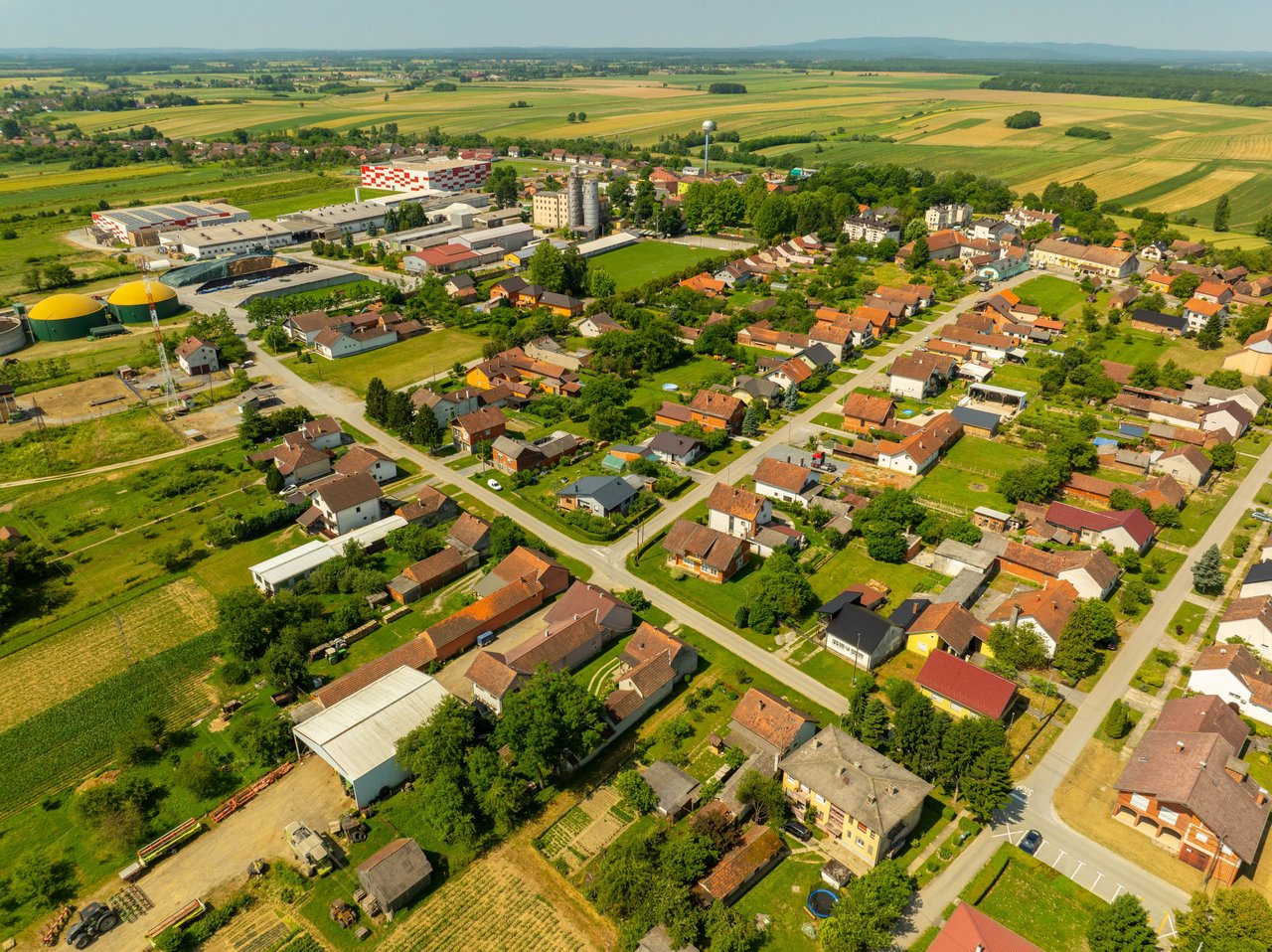
Tracy Hills is Tracy's largest active master-planned development — a major specific plan covering the south and southeast side of the city, with multiple residential phases under construction simultaneously by Lennar as the primary builder. The community is built around scale: 80+ acres of planned parkland, a future village center retail corridor, schools, trails, and a comprehensive neighborhood infrastructure that makes Tracy Hills feel like a city within a city.
Tracy Hills' defining characteristics: the sheer scope of the development, Lennar's dominant builder presence, direct I-580 access for Bay Area commuters, and a community that — at 88 out of 100 on Redfin's market competitiveness score — is among the most actively tracked new home markets in the Central Valley.
The average home price in Tracy Hills runs approximately $745,000 — with floor plans ranging from compact 3-bedroom layouts to 3,500+ square foot homes. The community has been in active development long enough to have both new inventory phases and resale homes from earlier phases, giving buyers more options than a purely new construction community.
Ellis is Tracy's other primary master-planned new construction community — positioned in south Tracy with a distinctly different identity. Where Tracy Hills is defined by scale and I-580 access, Ellis is defined by its waterfront centerpiece — a lagoon and waterfront feature that gives the community a visual character unlike any other Tracy neighborhood.
Ellis is genuinely a more boutique community than Tracy Hills — fewer total homes planned, a tighter geographic footprint, and a curated design aesthetic that appeals to buyers who want new construction with a more distinct lifestyle identity than a large-scale master-planned community typically offers.
Ellis is planned for multiple phases of single-family homes with 11 distinct floor plans ranging from 2,607 to 3,328 square feet — primarily larger homes than Tracy Hills' entry-level offerings. The community's town center, planned retail, and village commercial corridor are under development, with the lagoon as the signature lifestyle feature.
Both communities occupy the south Tracy 95377 premium — where new construction pricing runs above the citywide median. The specific price picture:
Tracy Hills: Average home price approximately $745,000 as of early 2026. Entry-level floor plans start in the mid-to-high $600,000s. Larger homes with premium lots approach $900,000+. The wide price range reflects the community's multiple simultaneous phases with different product types from different builder programs.
Ellis: Pricing varies by phase and current availability. Floor plans starting at approximately $700,000 for base configurations, with larger 3,300 sqft homes in upper phases approaching $850,000–$900,000. Ellis tends to skew toward larger floor plans than Tracy Hills' entry tier — the 2,607–3,328 sqft range means fewer entry-level buyers and more move-up purchasers.
The effective price comparison: The sticker price comparison doesn't tell the full story. Both communities carry Mello-Roos special tax assessments that add to the monthly carrying cost — and the Mello-Roos structure differs by phase, development year, and specific parcel. Before comparing prices, get the fully-loaded monthly cost for specific homes in each community: mortgage + property taxes + HOA + Mello-Roos/CFD assessment + insurance. The home that appears $30,000 cheaper may carry a higher Mello-Roos that makes the monthly cost equivalent or higher.
The builder incentive landscape: Both communities currently have builder incentive packages available — rate buydowns, design center credits, and closing cost assistance. Tracy Hills' larger inventory and Lennar's scale tend to produce more aggressive incentive programs on inventory homes. Ellis, with a smaller footprint, may have less negotiating flexibility but occasionally more inventory home availability. Ask specifically about current inventory home incentives at both communities before making comparisons.
Both communities are in south Tracy — but their specific positioning relative to the freeway system produces meaningfully different commute experiences.
Tracy Hills sits on the southwest side of Tracy with direct proximity to I-580 — the most Bay Area-favorable freeway positioning of any major Tracy new construction community.
For the Bay Area commuter whose daily or weekly destination is Livermore, Pleasanton, or Dublin — Tracy Hills' I-580 access is a genuine, measurable advantage over Ellis. Every Tracy Hills trip to the Bay Area begins with a shorter drive to freeway access.
Ellis is positioned in south Tracy, with I-205 as the primary freeway access point rather than I-580 directly. I-205 connects west to I-580 and east to I-5, providing good multi-directional access — but adding a short additional leg to Bay Area destinations compared to Tracy Hills' more direct I-580 approach.
For the buyer whose Bay Area commute is primary, Tracy Hills' I-580 positioning is a meaningful advantage. For the buyer commuting to Stockton, Manteca, or Lathrop — or who uses the ACE train — Ellis's I-205 access is equally practical, and the I-5 south connection is slightly more direct.
The commute bottom line: The difference is 5–10 minutes per Bay Area trip. Over a daily five-day commute week, that's 50–100 minutes per week, 40–70 hours per year. For a household where commute time is a primary quality-of-life factor, this difference is worth specifically calculating against the other trade-offs between the two communities.
This is the comparison point that surprises most Tracy Hills vs. Ellis buyers — because the answer is more nuanced than "same district, same schools."
Both Tracy Hills and Ellis are primarily served by Tracy Unified School District — which is different from the Jefferson School District that serves other parts of south Tracy. Understanding which specific schools serve which addresses in each community requires verifying by specific parcel, not by community name.
Tracy Unified School District: The larger district serving most of Tracy, with a range of schools at different performance levels. The newer school campuses built to serve the Tracy Hills and Ellis communities — specifically those constructed in the last 10–15 years as part of the communities' development agreements — tend to perform above the Tracy Unified average, reflecting the demographics of households buying in these price ranges.
The school verification requirement: In both Tracy Hills and Ellis, the specific elementary, middle, and high school serving your address depends on the specific phase and the school attendance boundaries as they've been drawn. Do not assume — verify. The community's model home team can tell you which schools serve their current inventory. A local agent can verify attendance boundaries for specific parcels.
Comparison to Mountain House: Buyers simultaneously evaluating Tracy Hills or Ellis alongside Mountain House often use school district as the deciding factor. Mountain House's Lammersville Joint Unified charter schools are consistently rated above Tracy Unified — and this school premium is real and quantifiable in both home prices and rental demand in Mountain House. If Lammersville's specific charter programming is a primary priority, Mountain House is the answer and no Tracy Hills or Ellis comparison is needed.
For buyers for whom school quality within Tracy Unified is acceptable — and who are choosing Tracy Hills or Ellis on the other dimensions in this guide — the school comparison between the two Tracy communities is approximately equivalent, with specific campus variation by phase.
Tracy Hills is designed for scale. The amenity package reflects Lennar's large-community development philosophy:
The character: Tracy Hills is a big, active, sprawling community. The scale that provides abundant park space and multiple simultaneous neighborhood options also means that new construction activity is ongoing in adjacent phases — which some buyers find energizing (community growth signals) and others find inconvenient (construction noise, traffic, dust).
Ellis is built around its signature feature: the lagoon and waterfront amenity that differentiates it from every other south Tracy community.
The character: Ellis is more intimate than Tracy Hills. The community is smaller in total planned homes, the aesthetic is more curated, and the waterfront centerpiece gives Ellis a lifestyle identity that Tracy Hills — for all its scale — doesn't replicate. For buyers who specifically value community character and visual distinctiveness over community scale, Ellis's lagoon positioning is a genuine differentiator.
Both Tracy Hills and Ellis use Mello-Roos/Community Facilities District (CFD) special tax financing to fund infrastructure — roads, parks, schools, utilities — that supports the community's development.
The Mello-Roos assessment runs for a defined period — typically 25–35 years from the date of establishment — and then expires. For recently built phases, the full assessment period is ahead. For earlier phases in Tracy Hills with resale homes, some portion of the Mello-Roos period may have already elapsed.
Typical Mello-Roos range: $250–$500/month depending on the specific parcel, phase, and CFD structure. This is in addition to:
On a $750,000 home in either community, the fully-loaded monthly carrying cost — mortgage at 6.5% + property taxes + HOA + Mello-Roos + insurance — typically runs $5,500–$6,200/month. The $4,000/month mortgage payment the builder's preferred lender quotes is not the carrying cost. Always get the fully-loaded number before comparing properties.
The resale advantage in early Tracy Hills phases: Tracy Hills resale homes from early phases have more of the Mello-Roos period elapsed — meaning the remaining assessment burden is lower and expires sooner. This is a specific financial advantage of buying an established resale in Tracy Hills versus a brand-new home in a later phase where the full CFD period is ahead.
Tracy Hills | Ellis | |
|---|---|---|
Price range | $650K–$900K+ | $700K–$900K+ |
Average price | ~$745,000 | Phase-dependent |
Primary builder | Lennar (dominant) | Multiple builders |
Freeway access | I-580 direct (2–5 min) | I-205 (3–6 min to I-580) |
To Livermore | 20–25 minutes | 25–30 minutes |
School district | Tracy Unified | Tracy Unified |
Signature amenity | 80+ acres parkland | Lagoon/waterfront |
Community scale | Large (many phases) | More boutique |
Mello-Roos | Yes ($250–$500/month) | Yes ($250–$500/month) |
HOA | ~$150–$250/month | ~$150–$250/month |
Community character | Active, large-scale | Curated, waterfront |
Redfin score (early 2026) | 88/100 | Active market |
New vs. resale | Both available | Primarily new |
Builder incentives | Competitive on inventory | Available by phase |
Choose Tracy Hills if:
Choose Ellis if:
Consider both if:
Before you walk into the first model home at either Tracy Hills or Ellis, answer this question honestly: is the school district or the commute your primary decision driver?
If school district is primary and you're drawn to Lammersville's charter programming: visit Mountain House before Tracy Hills or Ellis. The school district comparison between Tracy Hills and Ellis is approximately equivalent — and if Lammersville is what you actually want, neither Tracy community will satisfy the underlying priority.
If commute is primary and you're going to the Bay Area regularly: Tracy Hills' I-580 positioning is the right starting point. Ellis's waterfront is beautiful — but if you're driving to Pleasanton four days a week, the 5–10 minute daily difference adds up over years.
If community character and lifestyle is primary: tour Ellis's lagoon setting specifically and compare it to Tracy Hills' parkland scale. These are genuinely different experiences that appeal to genuinely different buyers — and the right answer becomes clear when you see both in person rather than on paper.
The honest conclusion: Tracy Hills and Ellis are both good communities that will both appreciate over time as south Tracy continues to develop. The choice between them is about which version of the 95377 new construction lifestyle fits your specific daily life — not which one is objectively superior.
If you'd like to tour both communities and compare current available inventory, builder incentive packages, and fully-loaded carrying costs for specific homes in each — that's exactly the comparison worth making before you commit to either.
Stay up to date on the latest real estate trends.
Central Valley
Donny Piwowarski | October 7, 2026
Where rents are, where vacancy stands, and what the market is telling landlords across San Joaquin County this fall.
Tracy, CA
Donny Piwowarski | October 7, 2026
A practical guide for families navigating an inherited property in Tracy and San Joaquin County.

Tracy, CA
Donny Piwowarski | October 5, 2026
The legal framework, the financial decisions, and the practical reality of one of the most complicated real estate transactions you'll ever face.

Tracy, CA
Donny Piwowarski | October 5, 2026
What AB 1482 actually allows this year, why the cap number matters for your renewal strategy, and the one mistake that makes the allowable increase irrelevant.

Tracy, CA
Donny Piwowarski | October 2, 2026
AB 12 changed the cap. AB 2801 added a photo requirement. The 21-day return rule has teeth. Here's how to handle security deposits without handing your tenant a lawsui… Read more

Tracy, CA
Donny Piwowarski | October 2, 2026
Probate properties can be genuine opportunities — or expensive surprises. Here's how to tell the difference.

Pleasanton, CA
Donny Piwowarski | September 30, 2026
What rents are actually doing, where the tenant demand is coming from, and how to price your property in a market that's moving differently by city.

Pleasanton, CA
Donny Piwowarski | September 30, 2026
A hyperlocal breakdown of the four cities that define one of the Bay Area's most competitive — and most misunderstood — real estate markets.

Tracy, CA
Donny Piwowarski | September 28, 2026
What 7.30% rates mean for your tenant base, your vacancy risk, and the strategic position Central Valley landlords are sitting in right now.
You’ve got questions and we can’t wait to answer them.