What Buyers Actually Want in 2026 — And What Sellers Keep Getting Wrong
Donny Piwowarski | August 7, 2026
Tracy, CA
Donny Piwowarski | August 7, 2026
Tracy, CA
Sellers optimize for what they value. Buyers buy what they value. In 2026, those two lists overlap less than most sellers assume. Here's the honest breakdown.
There's a gap at the center of most California home sales that nobody talks about directly: the seller spent money on the wrong things.
Not because they were careless. Because they optimized for what mattered to them — the things they noticed, the things they used, the things they were proud of. And the buyer, who doesn't share their specific taste or their specific daily routine, walked through and made a completely different calculation.
Understanding that gap is worth real money. In 2026, with more inventory and more comparison shopping than sellers have faced since 2019, the homes that move in 14 days are the ones that align with what buyers are actually making decisions on. The ones that sit for 60 are the ones where the seller's priorities and the buyer's priorities never found common ground.
Here's what buyers actually want in 2026 — and the specific mistakes sellers keep making because they're optimizing for something else.
The single most underappreciated shift in buyer behavior between 2021 and 2026 is the weight buyers now place on what a home costs to own — not just what it costs to buy.
After years of energy price volatility, insurance premium increases of 15–30% across California, and mortgage rates that have reset what monthly payment sensitivity looks like, the buyer in 2026 is running total monthly cost calculations that most sellers never see.
Owned solar is no longer a bonus — it's a monthly payment reducer that buyers calculate explicitly before comparing properties. Energy-efficient HVAC and appliances aren't a green preference — they're lower utility bills. A new roof and water heater aren't selling points the seller is proud of — they're guarantees that the buyer won't face a $15,000 bill in year two.
The seller who has owned solar, recently replaced the HVAC, and has a newer roof is offering something that translates directly into the buyer's monthly affordability calculation. They should be marketing those features with specific numbers, not listing them as footnotes.
The seller who doesn't have these features — and whose home has older systems — is competing against listings that offer more cost certainty. That affects offers, and it affects how much buyers are willing to pay. Pricing to reflect condition honestly is the only effective response.
What sellers get wrong: Spending renovation budget on cosmetic upgrades (new tile backsplash, fresh cabinet paint) while leaving aging systems unaddressed. The buyer will notice the backsplash and then ask how old the HVAC is. When the answer is 18 years, the backsplash stops mattering.
"Move-in ready" is a phrase every seller believes applies to their home. Most of them are wrong about what buyers mean by it.
Buyer surveys consistently show that the definition of move-in ready has evolved. It's no longer primarily about cosmetics — fresh paint and new carpet. In 2026, move-in ready means:
A home that has been freshly painted over dated cabinets, with a 16-year-old water heater and a roof that needs replacement "in a year or two," is not move-in ready by 2026 buyer standards — regardless of how it photographs.
Buyers who are comparing four or five options on a Saturday touring schedule have become highly efficient at identifying which properties will generate post-inspection complications. They've seen enough homes that they can often predict the inspection results from the showing. When they sense a property will generate a repair request, they factor that uncertainty into their offer — or they move on to the next one.
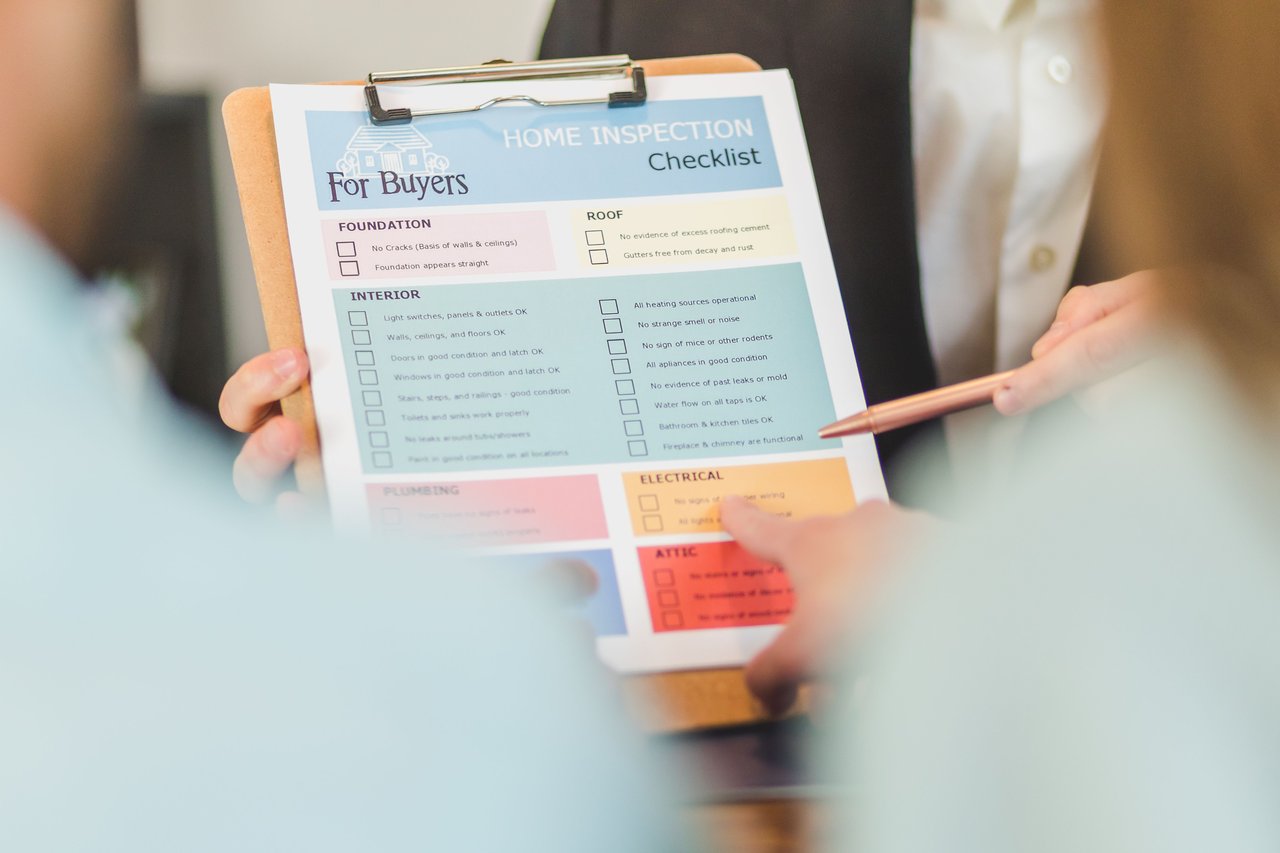
What sellers get wrong: Believing that cleaning, painting, and staging equals move-in ready. Those steps are necessary but not sufficient. The foundation of move-in readiness is the inspection report, not the presentation. Address the functional items first.
The pandemic permanently changed how Americans use their homes — and 2026 buyers are still shopping for the functional consequences of that change.
Dedicated home office space remains a high-priority feature for a significant portion of buyers. But the specific ask has evolved: buyers no longer want a room that can only be a home office. They want a room that can be a home office, a guest room, a creative studio, or a playroom depending on their life stage and their current needs. Flexibility is the priority.
The formal dining room that can only be a formal dining room — separate from the kitchen, with a chandelier sized specifically for the dining table — is not what buyers want. The flex space adjacent to the kitchen that can be dining, office, play area, or sitting room is what they want.
In the Central Valley specifically, this plays out in a very specific way: the downstairs bedroom with adjacent full bath is consistently one of the highest-value features in a listing in 2026. It serves multigenerational living (aging parents or adult children), home office with separation, or guest quarters — depending on who moves in and what their life looks like. Properties that have it sell for more than comparable properties that don't.
What sellers get wrong: Staging the home to show how they used it, rather than staging it to show how a buyer could use it. The formal dining room staged as a dining room closes down the flexibility. The same room staged with a desk in the corner and a small table shows two possible uses simultaneously and lets the buyer's imagination do the rest.
In California's climate — and especially in Tracy, Manteca, Lathrop, and the broader Central Valley — outdoor living space is a genuine home amenity, not just square footage on a lot diagram.
But not all outdoor space is equal in buyer perception. The large backyard with dead grass, a broken gate, and no shade structure is not the same asset as a finished backyard with a covered patio, maintained landscaping, and some form of outdoor seating area. The photos tell that story before the buyer ever sets foot on the property.
Buyers in 2026 are specifically looking for outdoor spaces that are immediately usable — not outdoor potential requiring $30,000–$50,000 in work before the space functions. A covered patio and basic landscaping turns a raw lot into a lifestyle asset that photographs and shows completely differently from the same square footage unfinished.
This is particularly true for properties competing against new construction in Tracy Hills, Ellis, or River Islands, where buyers have just walked through model homes with fully landscaped, amenitized outdoor presentations. A resale with an unfinished backyard is competing against a staged outdoor room. That's a losing comparison unless the price reflects the work required.
What sellers get wrong: Treating the backyard as "the buyer's project" without pricing the property to reflect that reality. The unfinished backyard isn't a neutral factor — it's a deduction in the buyer's calculation. Either finish it, or price it accordingly.
Storage has become one of the top-rated buyer priorities in 2026, and it's an area where sellers consistently underperform because they've gotten used to their own workarounds.
Buyers want: walk-in pantries, garage storage systems, linen closets that actually fit linens, primary closets that can fit two adults' wardrobes without creative organization, and mudroom-adjacent storage at entry points. They're also looking for attic access, garage depth, and outdoor storage solutions.
The home that has adequate storage presents as spacious and organized. The home that doesn't shows as cramped regardless of square footage — because the seller's belongings have expanded to fill every available surface, and the buyer can see that there's nowhere for anything to go.
Pre-listing decluttering serves two purposes: it makes the space photograph and show larger, and it reveals the storage that exists beneath the accumulation. A primary closet with 40% of its contents removed doesn't look emptied out — it looks like a primary closet with actual storage capacity.
What sellers get wrong: Assuming buyers will see past the clutter to the storage potential underneath. They don't. They see the clutter, they mentally fill it with their own belongings, and they conclude the storage isn't adequate. The solution is removing the clutter before the first showing, not explaining it away during.
The kitchen is the emotional center of a showing. It's where buyers spend the most time, where they run the most specific mental simulations of their daily life, and where their impression of the home is most durably formed.
But what matters in a 2026 kitchen is not what most sellers assume.
A HomeLight survey of top agents found that minor to midrange kitchen updates produce dramatically better ROI than major renovations. The highest-value kitchen improvements for resale are: new or refinished hardware, updated lighting fixtures, a professional deep clean, functional appliances in good condition, and countertop and cabinet condition that's been addressed.
A full kitchen gut renovation before selling — new cabinets, new countertops, new flooring, new appliances — typically returns 50–70 cents on every dollar spent according to current cost-vs-value data. The reason is simple: buyers have their own taste, and the kitchen you renovated to your preferences may not match what they would have chosen. They'll appreciate the new investment but mentally discount it against the cost of changing what they don't like.
The kitchen updates that consistently produce the best seller ROI: a thorough professional clean, cabinet hardware replacement ($100–$300), updated light fixtures ($150–$400), and — if needed — painting or resurfacing cabinets rather than replacing them. These updates cost 10–15% of a gut renovation and produce a comparable buyer impression at 80–90% of the cost.
What sellers get wrong: Major kitchen renovations 60–90 days before listing that consume renovation budget without producing proportional buyer value. The better spend is on the items that produce the first impression — lighting, hardware, cleanliness, and condition — rather than the complete replacement that may or may not align with the incoming buyer's taste.
This is the list most sellers don't want to hear. But the research is consistent.
1. Luxury upgrades above the neighborhood ceiling. A $40,000 primary bathroom renovation in a neighborhood where the top comps are $750,000 doesn't lift the home to $790,000. It produces $750,000 with a very nice bathroom. The principle of conformity limits return when you over-improve relative to the neighborhood ceiling.
2. Full kitchen gut renovations. As covered above — 50–70% ROI, misalignment risk with buyer taste, and opportunity cost of the renovation budget that could have been spent elsewhere.
3. Highly personalized design choices. Bold tile patterns, distinctive paint colors, custom built-ins in a specific style — these things represent the seller's taste and require the buyer to mentally repaint/replace them, which they price as a future cost.
4. Swimming pool additions. A pool is a lifestyle preference, not a universal value-add. Approximately 50% of buyers with children view pools as a safety concern rather than an amenity. Adding a pool before selling is one of the lowest-ROI major improvements in California real estate.
5. Expensive landscaping overhauls. Buyers want a maintained, usable yard. They don't want an elaborate garden that signals high maintenance. Clean, green, simple, and functional is what actually sells. The $15,000 drought-resistant native plant installation the seller is proud of registers to most buyers as "lots of plants I'll have to maintain."
The investments that consistently produce the best buyer response in 2026:
Here's the insight that ties all of the above together: buyers in 2026 want confidence.
Not beauty. Not luxury. Not the seller's favorite renovation. Confidence — that the home will perform as expected, that the inspection will be clean, that they won't write a check to a contractor six weeks after closing, that the systems will run correctly through the first California summer.
The seller who delivers that confidence — through a pre-listing inspection, documented maintenance history, functional systems in good condition, and honest pricing — creates a buyer experience that results in stronger offers and faster transactions.
The seller who delivers beauty without confidence — who paints over the ceiling stain rather than fixing the roof, who stages around the aging HVAC rather than disclosing it, who lists at a price that assumes no inspection findings — creates a buyer experience that results in post-inspection negotiations, extended timelines, and ultimately a lower net than the seller who invested in confidence from the beginning.
In 2026, buyers are more informed, more cautious, and more comparison-aware than at any point in the past five years. The seller who understands what they're actually evaluating wins the showing. The one who's prepared for a different buyer than the one who shows up on Saturday morning tends to find out the hard way.
Buyers in 2026 are not the same buyers as 2021. They have more options, more data, and more experience comparison-shopping than the pandemic-era buyer who waived everything and overpaid just to get a home.
They want operating cost certainty. They want functional move-in readiness. They want flexible spaces. They want usable outdoor areas. They want storage. And they want to walk away from the showing with confidence, not questions.
The sellers who meet those criteria — and who price accurately when they don't — are the ones moving in 14 days.
If you're preparing to list and you're not sure whether your planned improvements are the ones buyers will actually value, that's a 20-minute conversation worth having before the renovation checks are written.
The buyer doesn't have to tell you what they want. The data already has.
Stay up to date on the latest real estate trends.

Tracy, CA
Donny Piwowarski | September 21, 2026
The signals are there if you know how to read them. Most landlords aren't reading them — they're reacting to one data point and ignoring the others. Here's the honest … Read more

Tracy, CA
Donny Piwowarski | September 21, 2026
An opinion on the negotiating environment that has quietly emerged in Tracy, Manteca, Lathrop, Stockton, and the surrounding corridor — and why the buyers who understa… Read more

Tracy, CA
Donny Piwowarski | September 18, 2026
The landlord who screens well almost never faces an eviction. The one who screens by gut feel, inconsistent criteria, or without the required legal disclosures faces b… Read more

Tracy, CA
Donny Piwowarski | September 18, 2026
Most California landlords know when they bought. Few have a clear framework for when to sell. Here are the five signals that consistently indicate the exit decision is… Read more

Tracy, CA
Donny Piwowarski | September 16, 2026
Two of Tracy's most active new construction communities. Both in the 95377 corridor. Both carrying Mello-Roos. Both drawing Bay Area commuters and young families. But … Read more

Merced, CA
Donny Piwowarski | September 16, 2026
54% renter-occupancy — the highest of any city Haven covers. Average rents of $1,599–$2,075/month depending on property type. UC Merced driving consistent demand. And … Read more

Tracy, CA
Donny Piwowarski | September 14, 2026
Purchase prices have softened. Cap rates have improved from 4.96% at peak to 6.15% today. Rents are holding. And 49% of 2026 Central Valley investment buyers are local… Read more

Tracy, CA
Donny Piwowarski | September 14, 2026
An honest opinion on the question every Central Valley buyer and seller is quietly asking — what the demand math actually produces, why the answer isn't as simple as "… Read more

Tracy, CA
Donny Piwowarski | September 11, 2026
88% of home sales involve a real estate agent. With Central Valley homes priced between $450,000 and $800,000, a 1–2% swing in sale price means $4,500–$16,000 gained o… Read more
You’ve got questions and we can’t wait to answer them.