The True Cost of Maintaining a Home That No Longer Fits
Donny Piwowarski | August 25, 2026
Tracy, CA
Donny Piwowarski | August 25, 2026
Tracy, CA
Most Tracy homeowners are running the wrong calculation. They're comparing their current mortgage payment to what a smaller home would cost — and missing the $21,400 in annual costs that don't show up in that comparison.
The house hasn't changed. The family has.
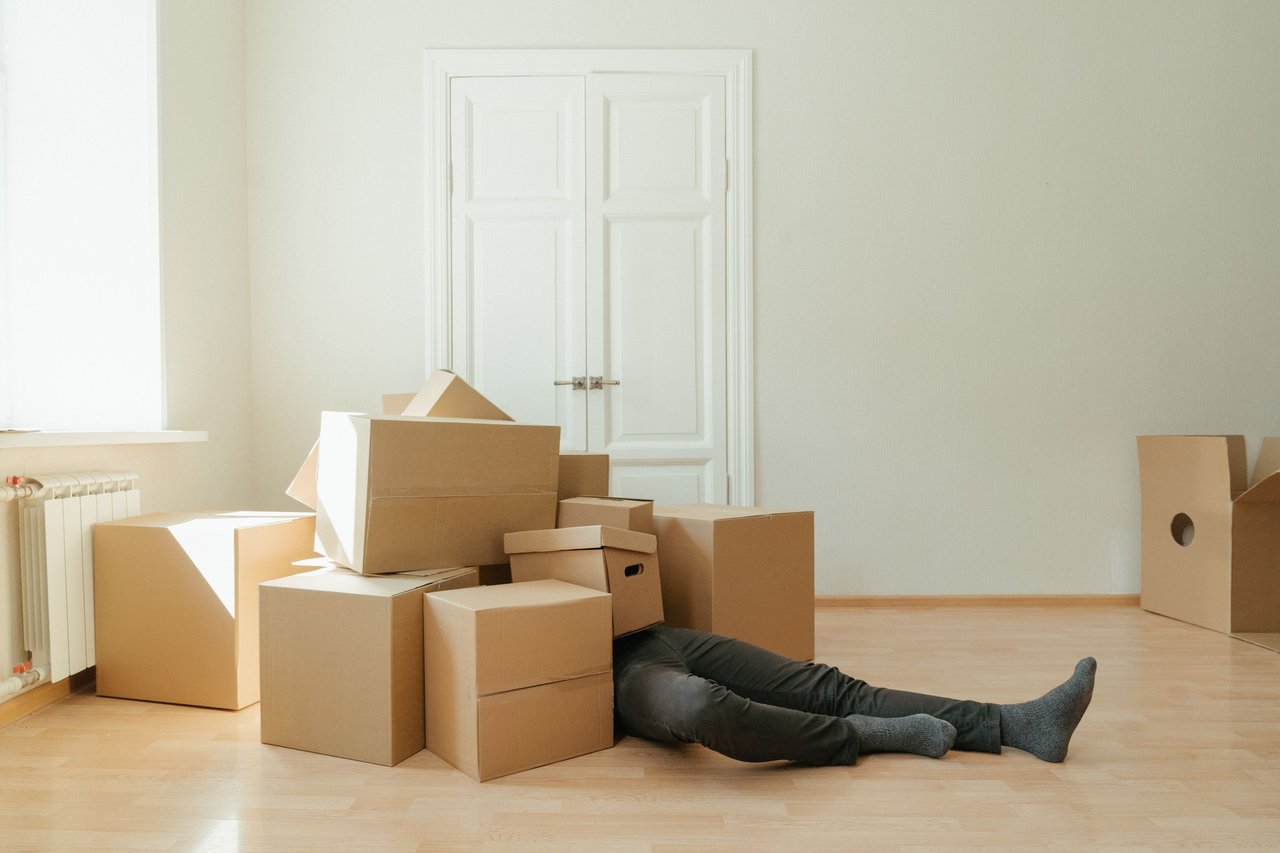
The four-bedroom, three-bathroom home in Tracy that made complete sense when the kids were in middle school and the guest room hosted grandparents twice a year looks different now. Different in the way things look when you walk through them with honest eyes: two bedrooms that nobody sleeps in, a backyard that gets used four times a year, a dining room set for eight in a household of two, and a monthly maintenance and utility burden that was reasonable when the house was full of people and feels different now that it isn't.
Most homeowners in this situation are running a calculation that goes like this: my mortgage payment is $1,800/month, which isn't bad. Why would I sell and pay more?
That calculation is incomplete. And the gap between the incomplete calculation and the complete one is often $1,000–$1,800 per month — money that's being spent on a home whose size no longer matches the life being lived in it.
Here's the complete picture.
The mortgage payment is the number most homeowners track. It's the one that shows up on the bank statement every month, the one that was negotiated at purchase, and the one that feels fixed and known.
The hidden costs of homeownership are less visible — but they're just as real, and they scale directly with the size of the home.
The average homeowner spends $8,808 annually on maintenance alone — and total hidden costs of homeownership reach $21,400 per year when including property taxes, insurance, and utilities. That's $1,783/month beyond the mortgage payment.
On a 2,400 sqft Tracy home, that $21,400 annual hidden cost breaks down approximately like this:
Property taxes: On a home currently assessed at $600,000 (reflecting a 2015 purchase at roughly $380,000 plus Prop 13 increases), property taxes run approximately $5,900–$6,600/year — $492–$550/month.
Homeowners insurance: California insurance premiums have surged nearly 70% since 2021. The average California homeowner now pays $2,802–$3,548/year in homeowners insurance. On a larger home in the Central Valley, plan for $200–$280/month.
Utilities: A 2,400 sqft home costs meaningfully more to heat and cool than a 1,400 sqft home. California electricity rates are among the highest in the country — 33.25 cents/kWh as of May 2026. In a Central Valley home running air conditioning through a 100°F summer, monthly electricity bills of $200–$350 are common. Annual utility costs (electricity, gas, water, internet) for a Central Valley home of this size run approximately $4,900–$6,000/year.
Maintenance: The standard guideline is 1–2% of home value annually. On a home currently worth $700,000, that's $7,000–$14,000/year in maintenance reserves — the HVAC service, the roof inspection, the fence repair, the water heater replacement, the gutter cleaning, the landscaping. Not all of it arrives every year. But some of it does every year, and all of it arrives eventually.
The two bedrooms nobody uses: Empty rooms still require heating and cooling. They still accumulate dust that requires cleaning. They still occupy square footage that drives the maintenance, insurance, and tax calculations above. The guest bedroom that hosts visitors twice a year is generating carrying costs 365 days a year.
Total: the Tracy homeowner in a 2,400 sqft home may be spending $21,000–$28,000/year in costs beyond the mortgage — $1,750–$2,330/month — for a home that's operating at perhaps 60–70% of its designed capacity.
Here's the mathematical reality of home size that rarely enters the conversation: maintenance costs, utility costs, and insurance costs all scale with square footage. Not perfectly linearly, but substantially.
A 1,400 sqft replacement home:
The homeowner who moves from 2,400 sqft to 1,400 sqft doesn't just reduce their mortgage — they reduce every size-sensitive carrying cost simultaneously. The utility savings alone on a Central Valley home can run $100–$150/month. The maintenance savings over a 5-year period often run $15,000–$30,000. The insurance premium reduction is immediate and permanent.
None of these savings appear in the mortgage-only comparison. They're invisible in the calculation most Tracy homeowners run — which is why the decision to stay often looks better on paper than it actually is.
Here's the dimension of the too-large home that's hardest to quantify and most underweighted in the decision: what it costs in time.
A 2,400 sqft home on a standard Tracy lot requires:
81% of homeowners report that costs exceeded their expectations — but the time costs are the ones that most consistently surprise people who've never quantified them. The Saturday afternoon spent cleaning a house you're not fully using. The weekend lost coordinating a repair you've been deferring. The mental bandwidth consumed by a property that requires more attention than the life you're currently living in it.
For the retired couple, the empty nester in the middle of a meaningful career chapter, or the person whose priorities have shifted toward travel and experience rather than home maintenance — the time cost of the too-large home is the most significant cost of all. And it compounds every year you defer the decision.
This is the piece of the conversation most real estate content skips — which is why it's worth naming directly.
A home that has held decades of life — children's heights marked on a doorframe, the kitchen where holidays happened, the backyard where the dog ran for 12 years — is not just a financial asset. It carries weight that no spreadsheet captures. The decision to leave it is not purely financial, and treating it as purely financial doesn't serve the homeowner.
But here's the honest counterpoint: the emotional attachment to the home and the emotional experience of living in it right now are not the same thing.
The couple who lives in 40% of a 2,400 sqft home, paying to heat and cool and maintain the other 60%, and spending weekends on upkeep they don't enjoy — are they experiencing the home the way they experienced it when the children were filling every room? Or are they maintaining a memory while a different kind of life waits?
The right-sized home isn't a smaller life. For many Tracy homeowners who have gone through this transition, it's a more intentional one — a home that fits who they are now, with carrying costs that match the life they're actually living, and with freed equity that funds the experiences, the security, and the flexibility that the too-large home was silently consuming.
For Tracy homeowners who are doing this math honestly, 2026 offers a specific opportunity that wasn't as clear two years ago.
Tracy's resale market in 2026 has meaningful inventory of single-story homes in the $430,000–$560,000 range — the category that fits most right-sizing households: 2 bedrooms with a dedicated office or 3 bedrooms, 2 bathrooms, single-story living without stairs, on lots that are manageable without consuming weekends.
This inventory exists because:
The Tracy homeowner who sells a 2,400 sqft home at current market value and buys a well-located 1,400 sqft single-story is making both transactions in the same market environment. The concern about "selling at the wrong time" is less relevant when the purchase happens simultaneously — you're not trying to time a market; you're reconfiguring an asset to match your life.
Let's run the numbers for a realistic Tracy right-sizing scenario.
Current home: 4BR/2.5BA, 2,400 sqft, purchased 2015 for $380,000. Current value: $700,000. Remaining mortgage: $185,000 (paid down 9 years). Monthly P&I: approximately $840/month at original 3.75% rate.
Annual carrying costs beyond the mortgage:
Replacement home: 3BR/2BA, 1,450 sqft, single-story. Purchase price: $490,000. Down payment: $130,000 (from sale proceeds). Mortgage: $360,000 at 6.5% = ~$2,276/month P&I.
Annual carrying costs on replacement:
The total monthly housing cost went up — because the new mortgage at today's rates is higher than the old mortgage at 2015 rates. This is the honest reality of right-sizing in 2026 that the downsizing conversation must not avoid.
But the freed equity — net sale proceeds minus down payment — is approximately $325,000 after selling costs and the replacement purchase. That $325,000, invested conservatively at 5%, generates approximately $16,250/year — $1,354/month — in income.
Net monthly housing cost after investment income: $3,740 − $1,354 = $2,386/month.
That's $541/month less than the current total housing cost of $2,927/month — despite the higher mortgage rate, in a smaller home with lower maintenance, lower utilities, and $325,000 in liquid assets that didn't exist before the transaction.
This is the complete calculation. Not the mortgage payment comparison. The whole picture.
Rather than prescribing an answer, here are the questions that most clearly surface it:
How much of your current home are you actually using? If the answer is 60% or less consistently, the other 40% is generating carrying costs without generating life value.
What is your full monthly housing cost — mortgage plus hidden costs? Most homeowners who run this number for the first time are surprised by it.
What would you do with freed equity if you had it? The couple that says "we'd travel more" or "we'd help the grandchildren with college" or "we'd finally feel financially secure" has answered the real question.
Is the maintenance load adding to your life or subtracting from it? There's no wrong answer. Some people genuinely enjoy maintaining a property. Others have been doing it out of inertia rather than preference.
What does the right-sized home chapter actually look like? Not smaller — different. A home that fits who you are now, not who you were when you bought the current one.
The true cost of maintaining a home that no longer fits is not just the mortgage payment. It's the $21,000–$28,000 in annual carrying costs that scale with square footage. It's the weekends spent on maintenance rather than living. It's the mental bandwidth consumed by a property that requires more of you than your current life has room to give it. And it's the $300,000–$500,000 in equity that sits idle while interest rates, insurance premiums, and maintenance costs quietly consume the margin it should be funding.
The right-sizing decision isn't for everyone. Some homeowners run the numbers and decide the emotional value of staying, combined with the rate they're preserving, outweighs the carrying cost. That's a valid conclusion when the math is run completely.
But most Tracy homeowners in this situation haven't run the complete math. They've run the mortgage payment comparison and stopped. The complete calculation — carrying costs, freed equity, investment income — often produces a different conclusion than the incomplete one.
If you haven't run the full picture for your specific home, your specific equity, and your specific carrying costs — that's a 30-minute conversation worth having before another year passes in a home whose size belongs to an earlier chapter.
Stay up to date on the latest real estate trends.

Tracy, CA
Donny Piwowarski | October 20, 2026
California landlords have a new legal obligation at move-in and move-out — one that took effect in stages over the past year and a half and is now fully in force for m… Read more

Tracy, CA
Donny Piwowarski | October 19, 2026
If you inherited a house in Tracy or the San Joaquin Valley but you live somewhere else — another city, another state, another country — you're managing one of the mor… Read more

Tracy, CA
Donny Piwowarski | October 16, 2026
Security deposit disputes are one of the most common — and most avoidable — sources of landlord liability in California. Miss a deadline, skip an itemization requireme… Read more
Tracy, CA
Donny Piwowarski | October 16, 2026
When you inherit a house in Tracy, Manteca, Stockton, or anywhere else in the San Joaquin Valley, one of the first real decisions you'll face is this: do you sell the … Read more

Tracy, CA
Donny Piwowarski | October 14, 2026
If you own a rental property in Tracy — or you're thinking about buying one — the mid-2026 market has a clear story: rents are holding strong, vacancy pressure is real… Read more

Tracy, CA
Donny Piwowarski | October 14, 2026
If someone in your family recently passed away and left behind a house in Tracy or the San Joaquin Valley, you're probably wondering: what actually happens to the prop… Read more

Tracy, CA
Donny Piwowarski | October 13, 2026
If you own rental property in California and you're not taking photos at move-in and move-out — timestamped, documented, and tied to your security deposit itemization … Read more

Tracy, CA
Donny Piwowarski | October 12, 2026
The honest answer isn't always what families expect — and the math often surprises them.

Tracy, CA
Donny Piwowarski | October 9, 2026
A step-by-step operational guide for handling lease renewals the right way in Central Valley and Tri-Valley rental properties.
You’ve got questions and we can’t wait to answer them.