New Construction Homes in Tracy, CA: The Complete 2026 Buyer's Guide
Donny Piwowarski | August 12, 2026
Tracy, CA
Donny Piwowarski | August 12, 2026
Tracy, CA
Tracy Hills, Ellis, Stanford Crossing, and the other active developments — what's available, what it actually costs, what the incentives are really worth, and the mistakes buyers make when they walk into the model home unprepared.
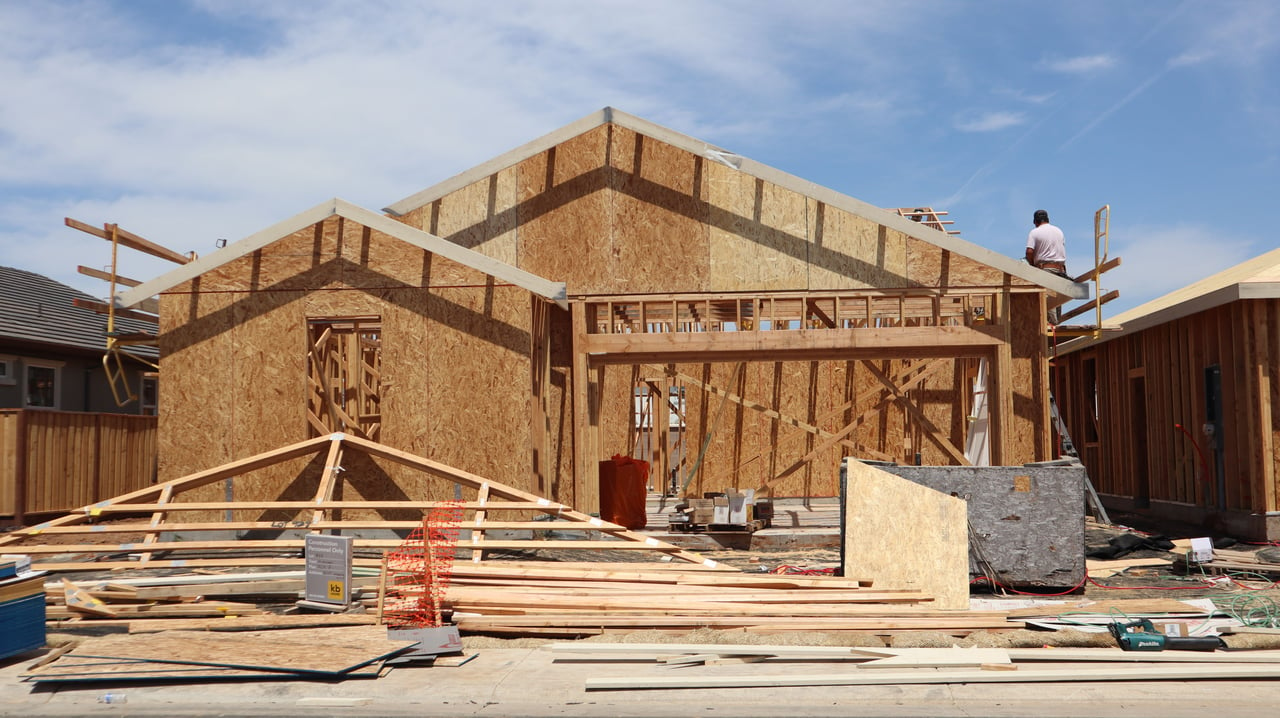
Walking into a Tracy new construction model home is a specific kind of experience. The staging is immaculate. The lighting is warm and carefully considered. The designer tile, the waterfall quartz island, the built-in speaker system in the primary suite — all of it is calibrated to produce one feeling: this is the home.
And it might be. Tracy's new construction communities are genuinely well-designed, and the amenity packages — resort pools, fitness centers, walking trails, planned village centers — are real lifestyle assets that established resale neighborhoods can't replicate.
But the model home is also a showroom. The sales representative is the builder's employee. The incentive package is structured to maximize the builder's margin, not yours. And the fully-loaded monthly cost of the home you're falling in love with may be meaningfully higher than the monthly payment the sales rep is quoting.
This is the honest 2026 buyer's guide to Tracy's new construction market — what's active, what each community delivers, how the incentive math actually works, and what to do before you sign anything.
Tracy has two major master-planned new construction communities actively selling in 2026, plus several smaller infill developments and emerging projects:
The largest and most established of Tracy's new construction communities, Tracy Hills is a 5,400-unit master-planned development in southwest Tracy anchored by Lennar as the primary builder. The community features one- and two-story floor plans, multigenerational design options, and a resort-style amenity package: clubhouse, resort-style pool, fitness center, parks, playgrounds, sports courts, and walking trails.
Price range (2026): The Tracy Hills median sale price was approximately $820,000 in late 2025 — down 11.6% year-over-year, with homes sitting an average of 60 days on market versus 26 days the prior year. That softening is significant: it means the buyer who walked away from Tracy Hills 18 months ago because it felt overheated is looking at a meaningfully different negotiating position today.
Location advantage: Tracy Hills sits in southwest Tracy with direct I-580 access — the most Bay Area-convenient positioning of any active Tracy development. For buyers who commute to the Tri-Valley, Tracy Hills' freeway positioning is worth real time.
What to know about the HOA and Mello-Roos: Tracy Hills carries monthly HOA dues plus special tax assessments (Mello-Roos/CFD). The combined carrying cost — HOA plus special assessments plus property taxes — can add $600–$900/month to the base mortgage payment depending on the specific parcel and phase. Always get the fully-loaded monthly cost, including all assessments, before comparing Tracy Hills to resale alternatives. A $750,000 Tracy Hills home with $800/month in carrying costs is not the same financial product as a $750,000 resale without HOA or Mello-Roos.
Floor plans: Lennar's Tracy Hills offerings range from compact three-bedroom layouts to 3,500+ square foot homes, including multigenerational plans with attached suites designed for in-law or adult child living arrangements.
Ellis is Tracy's other major master-planned community, known for modern home designs and a resort-style amenity package built around a waterfront and lagoon centerpiece. The Ellis community originally planned for 2,250 homes across multiple phases, with 11 different floor plans ranging from single-story to two-story designs in the 2,607–3,328 sqft range.
Price range (2026): Ellis pricing generally runs in a comparable range to Tracy Hills for similar square footage, with phase-specific variation. The specific builder mix in Ellis has evolved over the development's phases — verify current active builders and available plans with a local agent.
Location: Ellis is positioned in south Tracy, with different freeway access characteristics than Tracy Hills. For buyers heading south on I-5 toward Lathrop, Manteca, and the ACE corridor, Ellis positioning makes more directional sense than Tracy Hills' I-580 orientation.
Amenities: The lagoon/waterfront centerpiece, planned Village Center with retail and dining, parks, and community infrastructure make Ellis a destination-style community rather than a typical suburban subdivision.
Stanford Crossing and other emerging Tracy-area developments represent the next wave of new construction activity. These communities are earlier in their build-out, which means:
For buyers who want to get in early on a developing community — accepting some build-out uncertainty in exchange for the first-mover positioning — these earlier phases deserve consideration alongside the more established Tracy Hills and Ellis communities.
Here's the calculation most Tracy new construction buyers aren't running before they fall in love with a floor plan.
The base price: What the builder advertises. For Tracy Hills, this starts around $650,000 for entry-level plans and runs to $900,000+ for larger homes with upgrades. But the base price is almost never the price you pay.
Design center upgrades: Builders make substantial margin on the design center. The flooring you saw in the model home — the luxury vinyl plank, the upgraded tile, the designer carpet — is not the standard included option. Buyers routinely spend $30,000–$80,000 in the design center selecting the finishes that make the home look like the model. Budget for this explicitly before you compare the base price to a resale.
Lot premium: Specific lots — corner lots, larger lots, lots backing to open space or a trail — carry lot premiums that add $10,000–$50,000+ to the base price. If the lot you want is not the standard lot, the premium is real and it's separate from the base price.
HOA dues: Tracy Hills and Ellis carry monthly HOA dues. Verify the current amount — it varies by phase and community — and add it to your monthly payment calculation.
CFD/Mello-Roos assessments: Special tax districts (Community Facilities Districts or Mello-Roos) fund infrastructure, parks, and community improvements in newer master-planned communities. In Tracy Hills and Ellis, CFD assessments can run $3,000–$6,000/year — $250–$500/month — on top of standard property taxes and HOA dues. This is a real and significant additional monthly cost that does not appear in the builder's mortgage payment estimate.
Standard property taxes: New construction in Tracy is assessed at the purchase price for property tax purposes. At approximately 1.1–1.2% of purchase price (including the base Prop 13 rate plus any local overrides), a $750,000 home generates roughly $8,250–$9,000/year in base property taxes.
The fully-loaded monthly cost example:
Cost Component | Monthly Amount |
|---|---|
Mortgage (P&I at 6.5%, $600K loan) | $3,792 |
Property tax ($750K home) | $703 |
HOA dues | $150 |
CFD/Mello-Roos assessment | $375 |
Homeowners insurance | $175 |
Total monthly carrying cost | ~$5,195 |
That $5,195/month is the number that matters — not the $3,792 mortgage payment the builder's preferred lender may quote you. The gap between those two numbers is $1,403/month, or $16,836/year. Budget for the full number.
Tracy new construction builders in 2026 are offering meaningful incentive packages — and understanding exactly what they're offering, and how it's structured, determines whether the incentive is genuinely valuable or effectively a marketing tool.
Rate buydowns: The most aggressively marketed incentive. Builders offer temporary or permanent rate buydowns funded through their preferred lender. A 2-1 buydown (year one rate reduced by 2%, year two by 1%, then full market rate in year three) looks compelling in the marketing materials. The questions to ask:
Closing cost credits and design center credits: Real money, genuinely useful. A $20,000–$30,000 design center credit funded by the builder reduces what you spend out of pocket on upgrades. A closing cost credit reduces what you bring to closing. Both are legitimate value if the home and the price are right.
What builders won't typically negotiate on: List price on active phases. Base floor plan pricing. Standard lot assignments. Builders protect price integrity across the phase to maintain comparable values for existing owners. They negotiate on incentives — credits, upgrades, rate structures — not on the base price.
What builders are more flexible on: Inventory homes (completed homes sitting unsold). End-of-quarter and end-of-year pressure periods. Phase transitions when a builder is motivated to close out one phase before opening the next. These are the moments when the negotiating environment shifts meaningfully in the buyer's favor.
This is the most important thing in this guide, and it's the thing most buyers either don't know or don't take seriously enough.
The sales representative in the model home is a professional, typically knowledgeable, and usually genuinely helpful person. They are also employed by the builder. Their job is to sell homes for the builder at the highest price and most favorable terms for the builder.
They cannot represent your interests. They are legally prohibited from doing so.
Having your own buyer's agent when purchasing new construction in Tracy costs you nothing — builders compensate buyer's agents, and that compensation does not come out of your pocket or get added to your purchase price. What it gets you:
Buyers who walk into the model home unrepresented and sign a contract during the first visit are consistently the buyers who later discover they paid more than they needed to, chose a lot or plan that doesn't suit them as well as alternatives would have, or agreed to contract terms that limited their recourse when issues arose during construction.
Don't be that buyer.
One of the most common questions Tracy buyers are asking in 2026: with builder incentives running $30,000–$95,000 on new construction, does buying a resale still make sense?
The honest answer is: it depends on what you value and what your financial picture actually supports.
New construction wins when:
Resale wins when:
The buyer who understands both markets and can make an objective comparison has the most negotiating power in Tracy's 2026 market. The one who commits emotionally to new construction before seeing the full cost picture — or to resale before understanding what builders are offering — is making a constrained decision.
1. What is the fully-loaded monthly cost — including all HOA, CFD, and property tax? Get this number in writing before you go to the design center.
2. Is the rate buydown temporary or permanent? Model the payment at the fully-indexed market rate after the buydown expires. Can you comfortably afford that payment?
3. What is the move-in timeline for this specific plan and phase? Builder timelines slip. Get a realistic estimate, understand what your purchase contract says about timeline delays, and have a housing plan if the build takes 3–6 months longer than projected.
4. What does the purchase contract say about your rights if construction quality issues arise? New construction contracts typically include mandatory arbitration clauses, limited warranty terms, and provisions that limit your legal recourse. Know what you're signing before you sign it.
5. What are the comparable resale options at the same price point? Your buyer's agent should provide this analysis. A $750,000 Tracy Hills home with $800/month in carrying costs should be compared against a $700,000 resale with $150/month in HOA — the effective cost difference is real and it should inform the decision.
6. What happens to the incentive if I use my own lender? Some builder incentives are only available through the builder's preferred lender. Understand what you're giving up — if anything — by using independent financing.
Tracy's new construction market in 2026 is more buyer-friendly than it's been in years. Prices are down from 2022–2023 peaks, inventory homes are available, and builder incentive packages are running at some of the highest levels in recent memory.
For buyers who know what they're walking into — who understand the full carrying cost, who bring their own representation, who can compare new construction against resale alternatives objectively, and who know which questions to ask before the contract is signed — this is a genuinely interesting moment to buy new in Tracy.
For buyers who walk into the model home unprepared, fall in love with the staging, and sign a contract before running the fully-loaded monthly cost calculation — the experience tends to produce surprises that arrive after move-in.
The preparation that separates those two outcomes takes about 30 minutes of honest conversation with an agent who knows both the new construction and resale markets equally well.
That conversation should happen before the model home visit. Not after.
Stay up to date on the latest real estate trends.

Tracy, CA
Donny Piwowarski | September 18, 2026
The landlord who screens well almost never faces an eviction. The one who screens by gut feel, inconsistent criteria, or without the required legal disclosures faces b… Read more
Tracy, CA
Donny Piwowarski | September 18, 2026
Most California landlords know when they bought. Few have a clear framework for when to sell. Here are the five signals that consistently indicate the exit decision is… Read more
Tracy, CA
Donny Piwowarski | September 16, 2026
Two of Tracy's most active new construction communities. Both in the 95377 corridor. Both carrying Mello-Roos. Both drawing Bay Area commuters and young families. But … Read more

Merced, CA
Donny Piwowarski | September 16, 2026
54% renter-occupancy — the highest of any city Haven covers. Average rents of $1,599–$2,075/month depending on property type. UC Merced driving consistent demand. And … Read more

Tracy, CA
Donny Piwowarski | September 14, 2026
Purchase prices have softened. Cap rates have improved from 4.96% at peak to 6.15% today. Rents are holding. And 49% of 2026 Central Valley investment buyers are local… Read more

Tracy, CA
Donny Piwowarski | September 14, 2026
An honest opinion on the question every Central Valley buyer and seller is quietly asking — what the demand math actually produces, why the answer isn't as simple as "… Read more

Tracy, CA
Donny Piwowarski | September 11, 2026
88% of home sales involve a real estate agent. With Central Valley homes priced between $450,000 and $800,000, a 1–2% swing in sale price means $4,500–$16,000 gained o… Read more

Tracy, CA
Donny Piwowarski | September 11, 2026
The mistake doesn't happen at move-out. It happens on day one — before the tenant takes possession — when the landlord skips the photo documentation that California la… Read more

Turlock, CA
Donny Piwowarski | September 10, 2026
44% renter-occupancy. Cal State Stanislaus driving consistent student and faculty housing demand. Average rents of $1,679–$1,995/month depending on property type. And … Read more
You’ve got questions and we can’t wait to answer them.