How to Handle a Lease Renewal the Right Way in California 2026
Donny Piwowarski | August 28, 2026
Tracy, CA
Donny Piwowarski | August 28, 2026
Tracy, CA
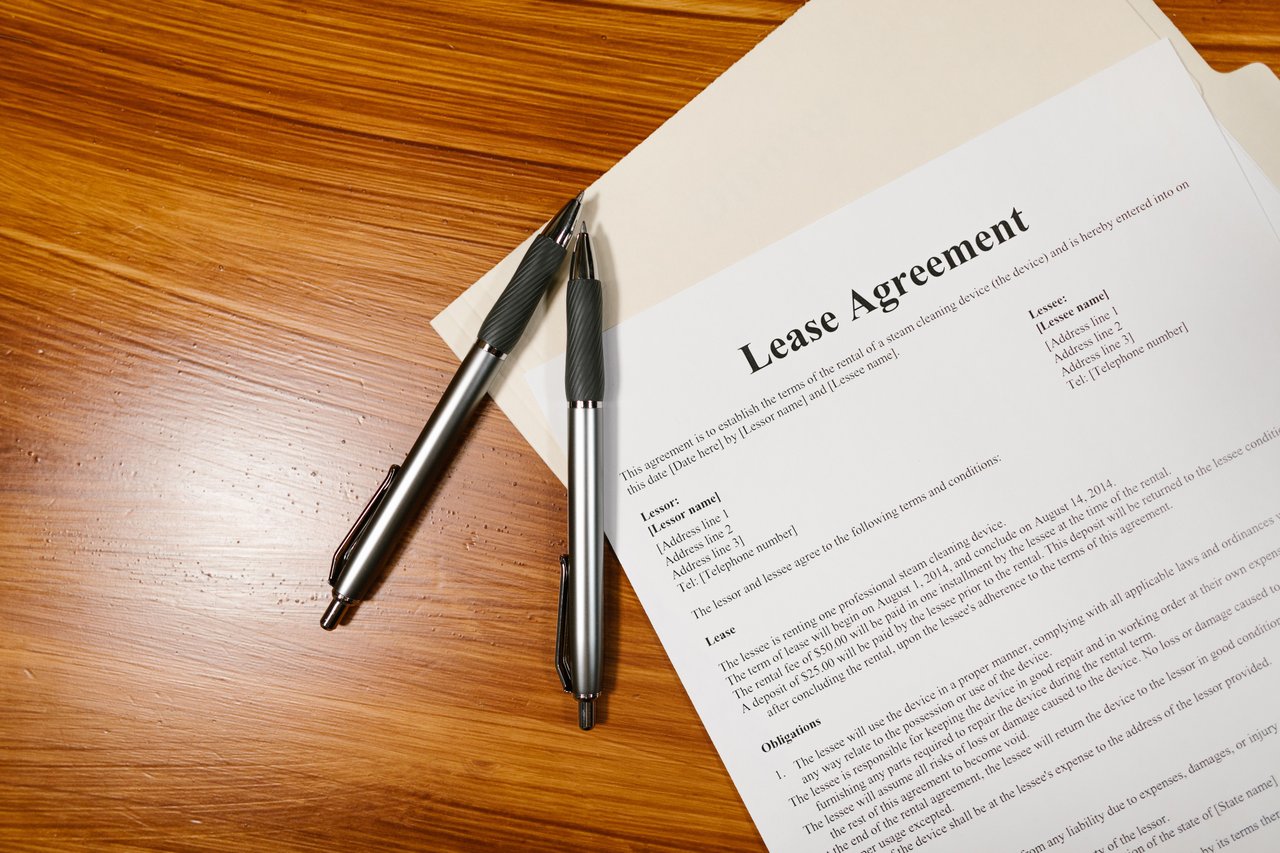
The renewal conversation most landlords have 30 days before lease expiration should have started 90 days earlier. Here's the complete 2026 framework — notice requirements, the August 1 cap change, the retention math, and the mistakes that cost landlords good tenants every time.
The lease renewal is the moment most landlords handle worst — and it's the moment that most determines whether a good tenant stays for another year or quietly starts browsing Zillow.
Most self-managing California landlords treat the renewal as a paperwork task: send a new lease 30 days before expiration, include a rent increase, wait for the tenant to sign. This approach is legally imprecise, strategically backward, and financially costly more often than landlords realize.
Here's the complete 2026 framework for handling California lease renewals correctly — from the 90-day starting point through the notice mechanics, the August 1 cap change that's currently relevant, and the retention math that determines what rent increase actually makes sense for your specific tenant.
Quick disclaimer: This is a property management perspective, not legal advice. California lease renewal and rent increase law is technical and varies by local jurisdiction and individual lease terms. Work with a licensed property manager or California landlord-tenant attorney on your specific situation.
This is the most consistent mistake in California lease renewals: starting too late.
(cite index="24-1">California law sets specific notice requirements depending on how long your tenant has lived at the property. If you plan to raise rent at renewal, this notice must be delivered before the increase takes effect — not the same day you hand them the new lease.</cite>
But the legal minimum notice period and the strategic minimum are different numbers. The landlord who contacts a tenant 30 days before lease expiration with a renewal offer and a rent increase is giving the tenant exactly enough time to decide whether to accept — and no time to feel valued, considered, or respected as a long-term renter.
The landlord who initiates the renewal conversation 90 days out is giving the tenant time to:
The 90-day timeline isn't just relationship strategy. It's also financial protection. The tenant who receives a 30-day renewal notice and decides to move out leaves you 30 days to re-rent — in a market where a quality tenant placement takes 21–30 days when you're doing it right. The tenant who signals non-renewal at 90 days gives you three months to find a qualified replacement without a vacancy gap.
The 90-day renewal calendar:
California Civil Code § 827 governs rent increase notice requirements. The rules are straightforward but frequently violated:
30 days written notice: Required for rent increases of 10% or less over any 12-month period.
90 days written notice: Required for any increase above 10% — though under AB 1482, increases above 10% are not permitted on covered properties regardless of notice period.
What the notice must contain:
How the notice must be served: (cite index="21-1">Notices must be delivered properly: personal delivery to the tenant, substitute service with mailing, or posting and mailing. Email alone is not enough unless the lease explicitly allows it and complies with California service rules.</cite>
This is a commonly violated requirement. A landlord who emails a rent increase notice — even if the tenant acknowledges it — may not have served it legally. Personal delivery is the most defensible method. If mailing, add 5 days to the notice period.
The cumulative increase rule: Multiple rent increases within a 12-month period that cumulatively exceed 10% trigger the 90-day notice requirement even if each individual increase was under 10%. Track increases across the full 12-month window, not just the most recent notice.
This is the most immediately actionable section for Central Valley landlords currently approaching renewal season.
California's AB 1482 CPI adjustment takes effect August 1, 2026. For the Sacramento Region (which covers Tracy, Lathrop, Manteca, Stockton, Modesto, Ripon, Salida, and surrounding San Joaquin and Stanislaus County properties):
(cite index="20-1">A notice served before August 1, 2026 can still use the incoming 8.8% statewide cap as long as the increase itself doesn't take effect until on or after August 1, and the required 30-day notice period is met.</cite>
The practical opportunity: A landlord with a covered property who wants to capture the higher 8.8% cap can serve the notice now — before August 1 — as long as the effective date of the increase is August 1 or later. The rate that governs is determined by the increase's effective date, not the date the notice was served.
The mistake to avoid: An increase with an effective date before August 1 must use the lower 6.3% cap, regardless of when the notice was served. If you serve a notice today with an effective date of July 15, you're locked into 6.3%. If you serve the same notice today with an effective date of August 1 or later, you can use 8.8%.
For landlords with renewals coming up in the July–September window, the timing of the effective date matters more than it usually does.
This is a point of confusion for many California landlords — and getting it wrong creates legal exposure.
(cite index="24-1">In California, a fixed-term lease automatically converts to a month-to-month tenancy once it expires if the tenant remains in the property.</cite>
This means:
What this does NOT mean:
For landlords who want to continue with a new fixed-term lease: offer the renewal in writing with the new terms at least 30 days before expiration. If the tenant signs, you have a new fixed-term lease. If they don't sign but continue paying rent and the landlord accepts it, the tenancy converts to month-to-month under the prior terms.
This is the calculation most California landlords skip — and it's the one that determines whether the rent increase you're planning will generate or destroy wealth.
The framework from Haven's approach to every renewal:
Step 1: Calculate the fully-loaded turnover cost for this unit. Cleaning, paint, carpet repair or replacement, re-leasing fee, and vacancy period. For a Central Valley single-family rental, realistic turnover costs run $4,000–$7,000.
Step 2: Calculate the annual revenue from the planned increase. A $150/month increase generates $1,800/year. A $250/month increase generates $3,000/year.
Step 3: Compare the annual revenue to the turnover cost. If the $250/month increase triggers a non-renewal: the landlord loses $7,000 in turnover costs to gain $3,000/year. They've paid 2.3 years of the increase's income upfront to fund the turnover.
If the same $150/month increase retains the tenant: the landlord gains $1,800/year with zero turnover cost. Over a 3-year retained tenancy, that's $5,400 in additional income — plus the turnover cost that was avoided.
The counterintuitive conclusion for long-term quality tenants: For a tenant who has been in the property 2+ years, pays reliably, maintains the property well, and has demonstrated they're a long-term renter — a below-market renewal offer is often the financially rational choice. Not generosity. Business.
(cite index="19-1">Best practices for landlords: align increases with lease anniversary — increases at renewal feel expected; mid-lease increases on month-to-month tenancies feel arbitrary. Avoid holiday and back-to-school periods — November–January and August increases correlate with higher turnover because tenants are already stressed by seasonal expenses.</cite)
Waiting until 30 days before expiration to initiate the renewal conversation. The legal minimum notice period and the strategic minimum are different. Start at 90 days.
(cite index="21-1">Email alone is not sufficient for legally valid rent increase service unless the lease explicitly allows it and complies with California service rules.</cite> A landlord who emails a rent increase and assumes it's been legally served is carrying potential exposure. Use personal delivery, certified mail, or posting with mailing — and document the service.
The most common calculation error: applying the increase to a base that includes amounts other than base rent. AB 1482 caps apply to base rent only. Utility pass-throughs, pet fees, and other charges do not factor into the increase calculation or the cap.
The second most common error: not tracking cumulative increases across the 12-month window. Two increases in 12 months that total 11% require a 90-day notice even if each individual increase was under 10%.
The Sacramento Region cap changed from 6.3% to 8.8% on August 1, 2026. A landlord who applies a 6.3% increase with an effective date of August 15 has left 2.5 percentage points of allowable increase — and the income it represents — on the table. Verify the current applicable rate before every increase notice.
Many California landlords renew by executing a simple rent increase addendum rather than updating the full lease. In 2026, this creates a specific compliance gap: the renewed lease may not reflect:
A lease last updated in 2022 is missing 2+ years of California statutory amendments. The renewal is the correct moment to update the full lease document — not just the rent amount.
90 days before expiration:
60 days before expiration:
30 days before expiration:
At lease execution:
For Haven's Central Valley landlord clients with lease renewals in the August–October 2026 window: if your property is a covered property under AB 1482 and you haven't yet served your renewal increase notice, the timing window to capture the 8.8% cap is now.
A notice served today with an effective date of August 1 or later uses the 8.8% rate. The 30-day notice requirement for increases of 10% or less is satisfied by the time the effective date arrives.
Don't miss this window by waiting. The difference between 6.3% and 8.8% on a $2,700/month Tracy rental is $67.50/month — $810/year. On a $3,200/month Lathrop rental, it's $80/month — $960/year. These are real income dollars that the correct timing captures and the incorrect timing leaves behind.
Haven Property Management Group manages the renewal process for Central Valley landlords as a structured operational function — not a reactive administrative task.
We start at 90 days. Every Haven-managed property gets a renewal initiation 90 days before expiration — a proactive outreach to the tenant that begins the conversation on a relationship-first footing rather than a transactional one.
We run the retention math before setting the increase. For every renewal, we evaluate the planned increase against the realistic turnover cost for that unit — to make sure the financial decision we're recommending is actually in the landlord's interest, not just legally permissible.
We verify the AB 1482 status and current cap rate. Every renewal notice uses the correct rate for the current period and the applicable effective date. The August 1 cap change is tracked and applied to every relevant renewal in the pipeline.
We update the full lease at renewal. Not just the rent addendum. The full lease — with all 2026 California required disclosures — is executed at every renewal so landlords aren't carrying compliance gaps from outdated lease templates.
We serve notices correctly. Personal delivery or documented mailing. Never email only. Service is documented for every notice.
If you're approaching a renewal and you're not certain whether your timing is right, your cap rate is correct, or your lease is current for 2026 — that's exactly the situation where Haven's operational expertise produces measurable value.
Call or text us directly: (855) 876-7653 Or get started at tracycapropertymgmt.com
Haven Property Management Group · 3120 N Tracy Blvd, STE D · Tracy, CA 95376 · DRE# 02215439 Proudly serving Tracy, Lathrop, Manteca, Stockton, Modesto, Salida, and the Central Valley.
Stay up to date on the latest real estate trends.

Tracy, CA
Donny Piwowarski | October 21, 2026
Preparing a vacant inherited home for sale is a different kind of project than getting your own home ready to list. You may not know the property's full history. There… Read more

Tracy, CA
Donny Piwowarski | October 21, 2026
If you own or are considering buying rental property in Tracy, California, this guide is for you. Tracy's rental market has been one of the more resilient in the Centr… Read more

Tracy, CA
Donny Piwowarski | October 20, 2026
California landlords have a new legal obligation at move-in and move-out — one that took effect in stages over the past year and a half and is now fully in force for m… Read more

Tracy, CA
Donny Piwowarski | October 19, 2026
If you inherited a house in Tracy or the San Joaquin Valley but you live somewhere else — another city, another state, another country — you're managing one of the mor… Read more

Tracy, CA
Donny Piwowarski | October 16, 2026
Security deposit disputes are one of the most common — and most avoidable — sources of landlord liability in California. Miss a deadline, skip an itemization requireme… Read more
Tracy, CA
Donny Piwowarski | October 16, 2026
When you inherit a house in Tracy, Manteca, Stockton, or anywhere else in the San Joaquin Valley, one of the first real decisions you'll face is this: do you sell the … Read more

Tracy, CA
Donny Piwowarski | October 14, 2026
If you own a rental property in Tracy — or you're thinking about buying one — the mid-2026 market has a clear story: rents are holding strong, vacancy pressure is real… Read more

Tracy, CA
Donny Piwowarski | October 14, 2026
If someone in your family recently passed away and left behind a house in Tracy or the San Joaquin Valley, you're probably wondering: what actually happens to the prop… Read more

Tracy, CA
Donny Piwowarski | October 13, 2026
If you own rental property in California and you're not taking photos at move-in and move-out — timestamped, documented, and tied to your security deposit itemization … Read more
You’ve got questions and we can’t wait to answer them.