The Hidden Cost of Renting While You Wait to Buy
Donny Piwowarski | June 22, 2026
Tracy California
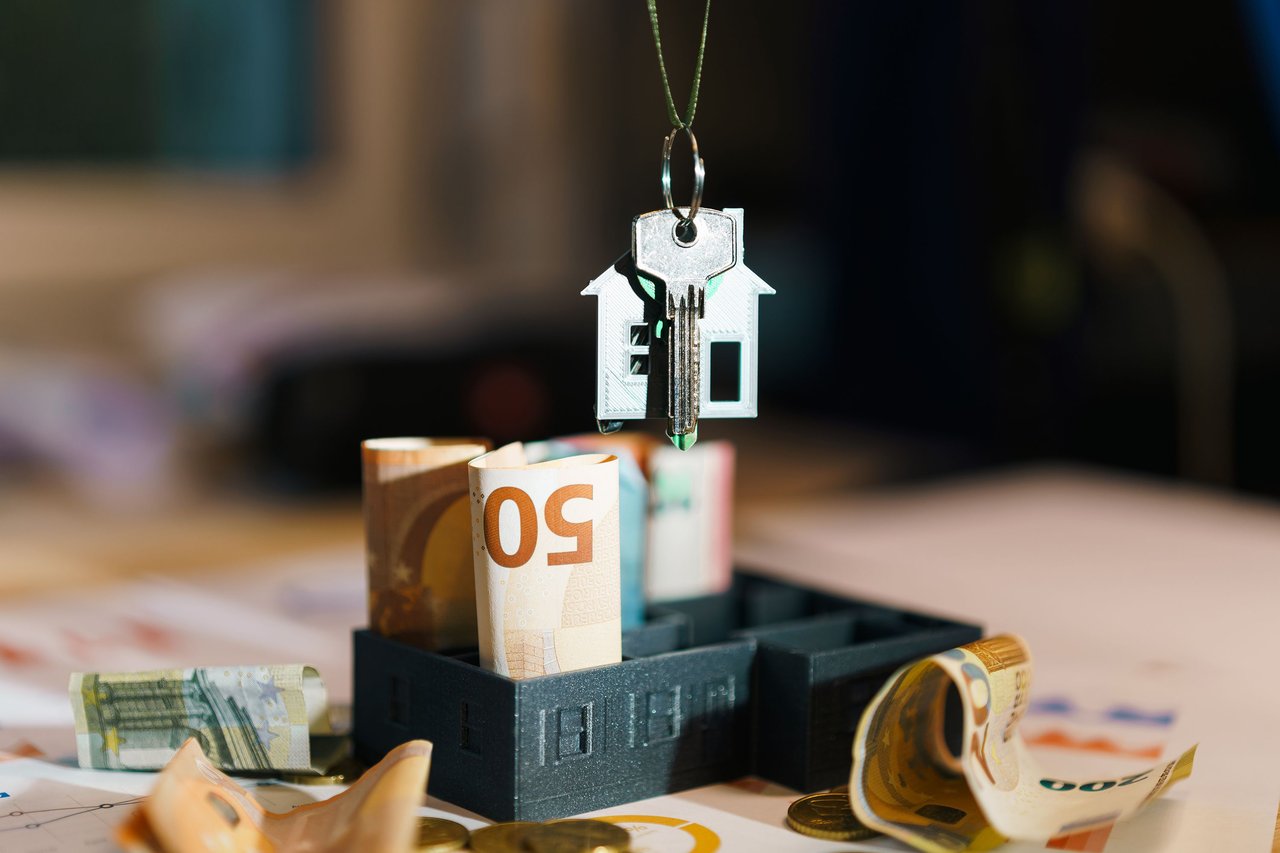
Donny Piwowarski | June 22, 2026
Tracy California
An opinion on the calculation most renters never run — and why "waiting for the right time" is costing Bay Area and Central Valley renters more than they realize.
It's Monday. You've been renting since 2021. You told yourself you'd buy "when rates come down." Rates came down a little. You told yourself you'd buy "when prices stabilize." Prices stabilized a little. You told yourself you'd buy "when things feel more certain."
Things haven't felt certain since 2019.
Meanwhile, your landlord just sent you the renewal notice. Rent is going up again. And the house two streets over that you toured eighteen months ago just sold for $40,000 more than the price you thought was too high.
Here's the calculation most renters never actually run — and it's the most expensive math problem they're avoiding.
Let's be honest about something most real estate content won't admit: in many California markets, renting is genuinely cheaper on a monthly basis than buying right now.
The rent-versus-mortgage gap in San Francisco sits at roughly 190% — meaning monthly mortgage costs run nearly double the equivalent monthly rent. In San Jose, the gap is around 185%. In Los Angeles, it's 88%. These numbers are real, and if you're renting in San Francisco and comparing your monthly payment to what a mortgage would cost, you are not making an irrational decision staying put for now.
This is not that argument.
This is the argument about what renting while you wait actually costs over time — the calculation that never shows up in the monthly payment comparison.
Every month you pay rent, you are building equity. Just not your own.
In a California market where homes appreciate at even a modest 3% annually, a $700,000 Tracy home gains roughly $21,000 in value per year. A $580,000 Manteca home gains roughly $17,400. That appreciation doesn't evaporate — it accumulates in the owner's equity, month after month, year after year.
If you're renting and your landlord owns the property, that $21,000 annual appreciation is going into their balance sheet. Every rent payment you make covers their mortgage while their asset grows. The longer you rent, the more wealth you are transferring to someone else's net worth.
This isn't a moral argument. It's arithmetic.
The renter who pays $2,500 a month for three years and then buys has paid $90,000 in rent with zero equity to show for it. The buyer who bought three years ago and paid $3,200 a month has built tens of thousands in equity through both principal paydown and appreciation — even if they paid more per month to do it.
Here's what the monthly rent vs. mortgage comparison always gets wrong: it compares today's rent to today's mortgage payment. It doesn't compare three years of rent to three years of a fixed mortgage payment.
San Francisco average rents rose 10.65% in the past year alone, hitting $3,826 per month. One-bedroom rents in the city jumped 18% over the same period. Bay Area rents broadly are projected to grow 4–5% annually through 2026, with San Jose projected to lead major metros at approximately 4.3% rent growth.
Your mortgage payment is fixed for 30 years. Your rent is not.
The renter who pays $2,400 today in Tracy at 4% annual rent growth will be paying $2,659 in year three, $2,887 in year five, and $3,109 in year seven. The buyer who locked in a mortgage at current rates pays the same principal and interest every single month for the next thirty years, regardless of what the market does.
By year five in the Central Valley, the gap between renting and buying a comparable home often inverts — the renter is paying more than the buyer. By year seven, it's not close.
The most common objection to buying right now is that the monthly mortgage payment is higher than renting. That's often true in year one. But it stops being true faster than most people model.
California break-even analysis — the point at which buying becomes financially superior to renting — runs approximately 4–5 years in Central Valley counties and 7–8 years in the Bay Area. That's the math accounting for appreciation, equity build, tax benefits, and cumulative rent inflation versus a fixed mortgage payment.
For a buyer considering Tracy, Manteca, or Lathrop with a 5–7 year plan — which describes most families buying a primary residence — the break-even arrives well within their ownership horizon. The buyer who waits another 2–3 years before pulling the trigger has just consumed most of their break-even window before the clock even starts.
California home prices in 2026 sit at a statewide median of $914,810 — up 4.1% from a year ago. Only 18% of California households can currently afford a median-priced home, meaning 82% of households are renting by necessity rather than by choice. That structural imbalance doesn't resolve itself quickly — it maintains demand for both rental housing and owner-occupied homes simultaneously.
What it also means: the buyer who is financially positioned to buy today is in the minority. The competition for well-priced, well-located Central Valley homes isn't going away. As mortgage rates drift from 6.47% toward 6% or below — even modestly — the buyers currently on the sidelines will re-enter the market simultaneously, competing for the same inventory with more purchasing power.
The buyer who acts before that wave doesn't just get a home. They get the home at today's price, before the next incremental demand surge.
The most expensive thing a California renter does is wait for conditions that never perfectly arrive.
2021: rates are too low, this feels like a bubble. 2022: rates jumped, prices might fall, I'll wait. 2023: prices corrected a little, but rates are too high. 2024: rates came down some, but the election creates uncertainty. 2025: the market feels like it's normalizing, maybe I'll wait for spring. 2026: I should probably buy soon.
The renter who runs this script for five years has paid five years of rent increases, missed five years of appreciation, and is now competing against the same buyers who were ahead of them in 2021 — except those buyers have five years of equity to deploy.
There is no perfect time to buy a California home. There is the time when your finances work, your life is ready, and the math says yes over your ownership horizon. For a lot of Central Valley buyers in 2026, that time is now — not because the market is perfect, but because the cost of continuing to wait is larger than most renters have honestly calculated.
A few questions that cut through the monthly payment noise:
How long do you plan to stay? In the Central Valley, the break-even on buying is 4–5 years. If you're staying at least that long, the math almost always favors buying over the full horizon.
What is your rent trajectory? If your rent has increased 8–10% in the past year and your lease comes up annually, model what your rent looks like in years three, five, and seven. Then compare that trajectory to a fixed mortgage payment.
What would you do with the down payment otherwise? The opportunity cost of a down payment invested elsewhere is real — but so is the leveraged return on real estate appreciation. A 3% annual gain on a $700,000 home is a $21,000 return on a $140,000 down payment (20%) — a 15% cash-on-cash return before principal paydown.
What does your landlord's equity look like right now? This isn't about resentment — it's about clarity. Your rent payments are building someone else's financial position. Understanding that concretely sometimes changes the calculus.
Renting while you wait isn't free. It has a real cost: equity you don't build, appreciation you don't capture, and rent increases you absorb every year while a fixed mortgage would hold flat.
In the Bay Area, the monthly payment gap is real enough that short-term renting can still make sense. In the Central Valley — Tracy, Manteca, Lathrop, Stockton, Modesto — the break-even arrives within 4–5 years, and the renter who waits another 2–3 years is narrowing that window every month.
The buyers who will look back on 2026 as the year they should have moved aren't the ones who couldn't afford to buy. They're the ones who kept waiting for certainty that never came — and handed five more years of equity to their landlord in the process.
If you've been running the math and it's not quite adding up the way you expect, bring your actual numbers to a 20-minute conversation. The hidden costs of renting tend to get clearer with a spreadsheet in front of you — not a Zillow tab.
Stay up to date on the latest real estate trends.
Tracy, CA
Donny Piwowarski | October 21, 2026
Preparing a vacant inherited home for sale is a different kind of project than getting your own home ready to list. You may not know the property's full history. There… Read more

Tracy, CA
Donny Piwowarski | October 21, 2026
If you own or are considering buying rental property in Tracy, California, this guide is for you. Tracy's rental market has been one of the more resilient in the Centr… Read more

Tracy, CA
Donny Piwowarski | October 20, 2026
California landlords have a new legal obligation at move-in and move-out — one that took effect in stages over the past year and a half and is now fully in force for m… Read more

Tracy, CA
Donny Piwowarski | October 19, 2026
If you inherited a house in Tracy or the San Joaquin Valley but you live somewhere else — another city, another state, another country — you're managing one of the mor… Read more

Tracy, CA
Donny Piwowarski | October 16, 2026
Security deposit disputes are one of the most common — and most avoidable — sources of landlord liability in California. Miss a deadline, skip an itemization requireme… Read more
Tracy, CA
Donny Piwowarski | October 16, 2026
When you inherit a house in Tracy, Manteca, Stockton, or anywhere else in the San Joaquin Valley, one of the first real decisions you'll face is this: do you sell the … Read more

Tracy, CA
Donny Piwowarski | October 14, 2026
If you own a rental property in Tracy — or you're thinking about buying one — the mid-2026 market has a clear story: rents are holding strong, vacancy pressure is real… Read more

Tracy, CA
Donny Piwowarski | October 14, 2026
If someone in your family recently passed away and left behind a house in Tracy or the San Joaquin Valley, you're probably wondering: what actually happens to the prop… Read more

Tracy, CA
Donny Piwowarski | October 13, 2026
If you own rental property in California and you're not taking photos at move-in and move-out — timestamped, documented, and tied to your security deposit itemization … Read more
You’ve got questions and we can’t wait to answer them.